








Where to Start with Edward Abbey
Edward Abbey is best known for two masterpieces that represent the dual tracks of his literary career: environmental non-fiction and eco-activist fiction. If you are new to his work, the best way to start is to read these two foundational books first. They establish his philosophy, his sharp-witted style, and his deep reverence for the American Southwest wilderness.
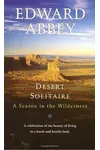
- The Non-Fiction Route: Desert Solitaire (1968). A lyrical memoir of Abbey's time working as a seasonal park ranger in Arches National Monument (now Arches National Park) in Utah. It blends poetic descriptions of sandstone canyons with fierce critiques of industrial tourism and overdevelopment. It is widely considered a cornerstone of modern nature writing.
- The Fiction Route: The Monkey Wrench Gang (1975). A rollicking, comic adventure about a group of four eco-saboteurs fighting against industrial destruction and the damming of rivers in the Southwest. It became a cult classic and inspired the founding of the real-life environmental group Earth First!
The Monkey Wrench Gang Duology
For readers who want to follow the exploits of George Washington Hayduke and his companions, Abbey wrote a direct sequel that should be read immediately after the first book. These two novels represent Abbey's main fictional series:
- The Monkey Wrench Gang (1975): Introduces George Washington Hayduke (a disgruntled Green Beret and Vietnam veteran), Doc Sarvis, Seldom Seen Smith, and Bonnie Abbzug as they plot to destroy the Glen Canyon Dam.
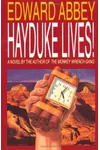
- Hayduke Lives! (1990): Published posthumously after Abbey's death in 1989. The story picks up several years later, revealing how Hayduke survived the first book's climax. The gang reunites to fight a massive walking dragline excavator nicknamed "Goliath." Note that because Abbey died before final revisions, the book is often considered slightly unpolished compared to its predecessor.
The Jack Burns "Lone Ranger" Crossover Cycle
While Abbey's novels are often read as standalones, he frequently crossed characters over from different books, creating a loose shared universe. The most famous example of this is the character of Jack Burns, a rugged, anti-modern cowboy who acts as Abbey's ultimate anarchist archetype. Reading these books in order reveals a tragic, sprawling character study:
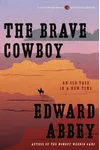
- The Brave Cowboy: An Old Tale in a New Time (1956): This is the formal debut of Jack Burns. He attempts to free a friend from a jail in New Mexico and ends up fleeing on horseback into the mountains, pursued by modern law enforcement using jeeps and helicopters. It was adapted into the classic 1962 film Lonely Are the Brave.
- The Monkey Wrench Gang (1975): Jack Burns makes a subtle, unnamed cameo appearance as the mysterious "Lone Ranger" who assists the main characters in the desert.
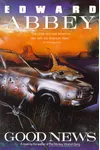
- Good News (1980): Abbey's only science-fiction/dystopian novel. Set in a collapsed, near-future Southwest, it features an elderly Jack Burns searching through the ruins of Phoenix for his long-lost son.
- Hayduke Lives! (1990): Jack Burns returns as an active character, working alongside the monkey wrench gang to tie Abbey's fictional worlds together.
Publication Order of Edward Abbey's Novels
Reading Abbey's fiction in publication order allows you to watch his style transition from traditional Western realism to radical satire and experimental dystopia. It also tracks the development of his environmental activism.
- Jonathan Troy (1954): Abbey's debut novel. Set east of the Mississippi in a Pennsylvania mining town, it focuses on the coming-of-age struggles of a young man. Abbey grew to despise this book, calling it juvenile and refusing to let it be reprinted. It is now extremely rare.
- The Brave Cowboy (1956): Introduces Jack Burns and establishes Abbey's primary theme: the clash between rugged individualists and encroaching modern civilization.
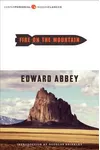
- Fire on the Mountain (1962): Tells the story of John Vogelin, an elderly New Mexico rancher who refuses to surrender his land to the federal government when they try to seize it via eminent domain to expand the White Sands Missile Range.
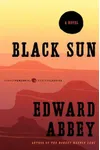
- Black Sun (1971): A bittersweet, semi-autobiographical romance about a fire lookout in the Grand Canyon who falls in love with a younger woman.
- The Monkey Wrench Gang (1975): Abbey's most famous and influential work of fiction.
- Good News (1980): A dark, satirical look at the collapse of industrial civilization.
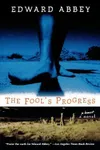
- The Fool's Progress (1988): Subtitled "An Honest Novel," this is Abbey's fat semi-autobiographical masterpiece. It follows Henry Holyoak Lightcap (a thin disguise for Abbey himself) on a dying man's road trip from the Southwest back to his childhood home in West Virginia.
- Hayduke Lives! (1990): The posthumous sequel to his famous eco-satire.
Essential Non-Fiction and Essays
Abbey was just as prolific a non-fiction writer as he was a novelist. His essays detail the real-world adventures, travels, and philosophies that inspired his fiction. After reading Desert Solitaire, the following collections are highly recommended to expand your understanding of his worldview:
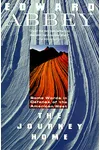
- The Journey Home (1977): Subtitled "Some Words in Defense of the American West," this collection serves as a direct companion to the themes found in The Monkey Wrench Gang.
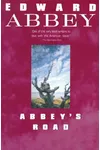
- Abbey's Road (1979): A collection of travel essays covering his excursions to places like Australia and Mexico, alongside reflections on the Southwest.
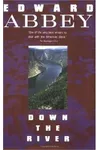
- Down the River (1982): Focuses on river rafting trips, including a retrospective journey down the Colorado River before it was dammed.
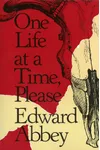
- One Life at a Time, Please (1987): A collection containing some of his most politically charged and controversial essays on immigration, environmental politics, and anarchy.
What to Know Before You Start
When diving into Abbey's catalog, keep a few caveats in mind. First, his writing style is highly opinionated, contrarian, and deliberately provocative. He often wrote with a sense of dark humor and hyperbole, which means his characters and essays can sometimes be shocking to modern sensibilities. Second, while the crossover of Jack Burns suggests a shared universe, there is no strict continuity; characters age and change in ways that serve the individual thematic needs of each novel rather than a rigid timeline. Treat the connections as thematic links rather than a serialized plot.