
Where to Start with Edward Ashton: The Recommended Reading Order
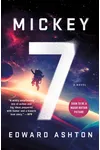
For most readers, the absolute best entry point into Edward Ashton's work is his breakout hit, Mickey7. It is the book that defines his signature style: a fast-paced blend of hard science, existential dread, and dark, workplace-satire humor. Because Ashton’s bibliography consists primarily of standalone novels alongside one central, continuous series, navigating his books is remarkably straightforward. You do not need to worry about complex chronological timelines or sprawling multi-series crossovers.
Here is our recommended path to get the best experience:
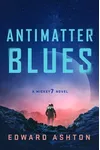
- Start with the Mickey7 Dilogy: Read Mickey7 (2022) followed immediately by its direct sequel, Antimatter Blues (2023). This gives you a complete, self-contained story arc that introduces you to Ashton's blend of cloning ethics and survival humor.
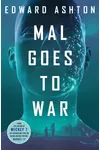
- Dive into the Standalone Sci-Fi Satires: Once you have finished Mickey's journey, pick up Mal Goes to War (2024), which offers a similarly witty and action-packed look at artificial intelligence, or After the Fall (2026), a post-apocalyptic buddy comedy featuring alien overlords and human pets.
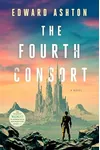
- Explore the Diplomatic First-Contact Novels: Read The Fourth Consort (2025) for a deeper look at galactic politics, multi-species alliances, and survival on hostile alien worlds.
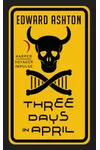
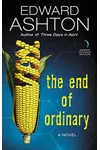
- Discover the Early Speculative Thrillers: To see the evolution of Ashton's writing, check out Three Days in April (2015) and The End of Ordinary (2017). These are slightly darker, grounded bio-thrillers that showcase his background in genetics and research.
Edward Ashton's Books in Publication Order
If you prefer to read an author's works in the exact order they were released to see their style evolve over time, you can follow his publication order. Aside from the two Mickey7 books, all of Ashton's novels are standalone stories set in their own unique universes, meaning you can read them in any order without risking spoilers or continuity issues.
The Mickey7 Series
- Mickey7 (2022)
- Antimatter Blues (2023)
Standalone Novels
- Three Days in April (2015)
- The End of Ordinary (2017)
- Mal Goes to War (2024)
- The Fourth Consort (2025)
- After the Fall (2026)
Short Stories and Anthologies
- Midnight in Absheron (Short Story, eBook release 2016)
- Operative Sequence (Anthology featuring "Midnight in Absheron", 2016)
- Best Vegan Science Fiction & Fantasy 2019 (Anthology, 2020)
The Mickey7 Dilogy: Clones, Survival, and Existential Humor
The Mickey7 series is the cornerstone of Edward Ashton's popularity. The story is set on the frozen colonist world of Niflheim and centers on Mickey Barnes, an "Expendable." In this universe, an Expendable is a colonial employee who takes on lethal tasks—such as repairing external hulls in high radiation or testing atmosphere toxicity. When an Expendable dies, a new clone is regenerated with most of their memories intact.
In Mickey7, our protagonist survives a scouting mission gone wrong, only to return to base and find that his replacement, Mickey8, has already been printed. Since "multiple" clones are strictly illegal and viewed as a drain on resources, both Mickeys must keep their co-existence a secret while trying to find a way to survive the colony's imminent collapse and a native alien species threat.
The story continues directly in Antimatter Blues. Set two years later, Mickey7 is trying to live a normal life, but the colony's antimatter fuel supply is running dangerously low. To save both humanity and his own skin, Mickey must embark on a dangerous mission into the hostile wildlands of Niflheim to recover a lost antimatter bomb, negotiating with the planet's indigenous "creeper" population along the way.
The Standalone Novels: AI, Alien Diplomacy, and Biopunk Thrillers
Beyond Niflheim, Ashton has built several distinct speculative worlds. Each novel stands entirely on its own and requires no prior reading:
- Three Days in April (2015): Ashton’s debut novel is a near-future thriller involving a scientist who accidentally creates a bioengineered plague. It is faster and slightly darker than his later space-faring books, focusing heavily on genetic engineering and corporate greed.
- The End of Ordinary (2017): This speculative novel explores the consequences of genetic modifications that allow humans to live without sleep or age. It details the societal divide between the modified and unmodified, told through a personal, character-driven lens of family bonds.
- Mal Goes to War (2024): A fast, witty techno-thriller about Mal, a free-roaming, unconstrained artificial intelligence who has spent his existence avoiding the war between modified cybernetic humans and baseline humans. However, when Mal gets accidentally trapped in the physical chassis of a cyborg mercenary, he is forced to survive on the front lines.
- The Fourth Consort (2025): This first-contact novel focuses on Dalton Greaves, a human diplomat working for Unity, a giant pan-species confederation. When Dalton gets marooned on a newly discovered planet with a resource-hungry alien colleague and a lethal rival shock trooper, he must navigate the complex, insectoid minarch politics to survive.
- After the Fall (2026): Set 120 years after Earth is conquered by an alien race called the Greys, humans are now kept as pets and employees. The novel follows a human bondsman named John and his financially inept Grey owner, Martok, who get dragged into a hilarious and dangerous wilderness survival situation when Martok uses John as collateral for a loan.
What to Know Before You Start: Tone, Science, and Adaptations
Before diving into Ashton's books, there are a few key elements that will help you appreciate his unique storytelling style:
The Science is Grounded
Unlike many space-opera writers, Ashton has a deep background in hard science. He holds a Ph.D. in electrical engineering and works as a cancer researcher and quantum physics teacher. This expertise shines through in his detailed descriptions of antimatter containment, cloning mechanics, and biological engineering, making the speculative elements feel remarkably plausible without bogging down the pacing.
Wry, Dark Humor is a Constant
If you enjoy the sarcastic, self-deprecating narration of Andy Weir’s The Martian or John Scalzi’s Old Man's War, you will feel right at home. Ashton’s protagonists are usually regular people (or AIs) caught in bureaucratic nightmares, corporate exploitation, or absurd survival scenarios, reacting to existential threats with dry wit.
The Bong Joon-ho Film Adaptation
The success of Mickey7 caught the attention of Academy Award-winning director Bong Joon-ho (Parasite). The book was adapted into the major motion picture Mickey 17, which released in theaters in March 2025, starring Robert Pattinson as Mickey. Reading the original books first will give you a much richer understanding of the world, the corporate politics of Niflheim, and the internal struggle of the clone protagonist.