

Where to Start Reading Edward Ellsberg
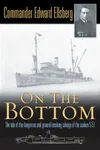
Edward Ellsberg lived a life defined by high-stakes engineering and daring maritime rescues, and his writing reflects that absolute authenticity. For readers new to his catalog, the absolute best starting point is his landmark first book, On the Bottom (originally published in 1929, though often listed under its 1960 reprint year in modern databases). This book chronicles the grueling, heroic efforts to raise the sunken submarine S-51 from the ocean floor. It serves as the perfect introduction to his clear, technical yet intensely dramatic storytelling style.
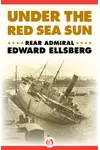
After experiencing his early salvage work, you should dive straight into his acclaimed World War II trilogy, starting with Under the Red Sea Sun (1946). This sequence of memoirs captures the peak of his wartime service and offers a continuous narrative of salvage operations across different theater locations.
The WWII Salvage Trilogy: Under the Red Sea Series
While Ellsberg wrote several standalone memoirs and novels, his primary sequence is the Under the Red Sea Trilogy. These three books are non-fiction memoirs detailing his engineering triumphs during the Second World War. To get the full narrative arc of his wartime service, they should be read in chronological order (which matches their publication order):
- Under the Red Sea Sun (1946): Focuses on the Herculean task of clearing the mass of scuttled ships and restoring the vital dry docks at the port of Massawa, Eritrea, under extreme heat and political pressure.
- No Banners, No Bugles (1949): Picks up with his appointment as the Principal Salvage Officer during Operation Torch in North Africa, recounting the dangers of reclaiming blocked harbors under enemy fire.
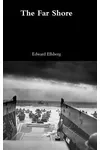
- The Far Shore (1959): Moves to the European theater, detailing the design, building, and deployment of the massive artificial Mulberry harbors that made the Normandy D-Day landings possible.
The Philip Ramsay Treasure Hunt Series (Fiction)
In addition to his real-life salvage accounts, Ellsberg wrote a highly popular series of youth-oriented ocean adventure novels centering on deep-sea diving and treasure hunting. These books feature recurring characters, primarily the salvage expert Philip Ramsay. They are best read in order of release:
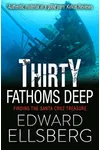
- Thirty Fathoms Deep (1930 / recorded as 1929 in some local catalogs): Introduces the search for a treasure-laden Spanish galleon, the Santa Cruz, resting deep on the ocean floor.
- Ocean Gold (1935): Philip Ramsay takes command of the salvage vessel Lapwing to continue the recovery operations.
- Spanish Ingots (1936, also published under the title Submarine Treasure): Follows the crew as they charter an "S" class submarine to salvage the treasure after their original vessel is scuttled.
- Treasure Below (1940): The final chapter in the crew's attempts to successfully transport and secure the recovered gold.
Other Standalone Novels, Nonfiction, and Adaptations
Beyond his main series, Ellsberg published several other key works that showcase his versatility across naval history, fiction, and biographies. They can generally be read as standalones:
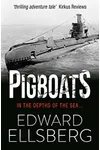
- Pigboats (1931): A dramatic fiction novel about World War I submarine warfare. It was highly popular and adapted into the 1933 MGM film Hell Below.
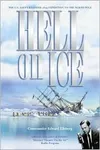
- Hell on Ice (1938): A fictionalized, highly researched account of the tragic 1879 USS Jeannette Arctic expedition. Ellsberg later adapted this into a juvenile version titled Cruise of the Jeannette (1949).
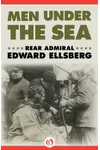
- Men Under the Sea (1939): A major nonfiction companion to On the Bottom, detailing the broader history of diving technology, the rescue operations of the USS S-4 and USS Squalus, and the physiological struggles of deep-sea divers.
- Captain Paul (1941): A historical novel celebrating the life of John Paul Jones. Similar to his Arctic work, Ellsberg created a condensed juvenile version of this book titled "I Have Just Begun to Fight!" (1942).
- Mid Watch (1954): A dramatic novel based on actual naval history, dealing with an engine room explosion and the resulting court-martial of a young officer who is unfairly blamed by the naval bureaucracy.
Edward Ellsberg Books in Publication Order
If you prefer to read Ellsberg's works in the order they were presented to the public, follow this publication timeline. Note that modern databases sometimes reference later reprint dates (such as 1960 for On the Bottom), but the original releases are listed below:
- On the Bottom (1929)
- Thirty Fathoms Deep (1930)
- Pigboats (1931)
- S-54 (1932) — A collection of maritime salvage short stories.
- Ocean Gold (1935)
- Spanish Ingots (1936)
- Hell on Ice (1938)
- Men Under the Sea (1939)
- Treasure Below (1940)
- Captain Paul (1941)
- "I Have Just Begun to Fight!" (1942)
- Under the Red Sea Sun (1946)
- No Banners, No Bugles (1949)
- Cruise of the Jeannette (1949)
- Mid Watch (1954)
- The Far Shore (1959)
What to Know Before You Start
Ellsberg’s writing is famous for its uncompromising technical realism. As a pioneer of underwater cutting torches and diving methods, he doesn't shy away from explaining the physics of decompression sickness, pressure differentials, and mechanical salvage rigs. While this adds incredible authenticity, modern readers should be prepared for a heavy dose of naval jargon and engineering terminology. Despite this detail, the human element — the bravery of the divers working in absolute darkness and the bureaucratic battles Ellsberg fought to get salvage equipment — keeps the stories moving at a thriller's pace.