


Where to Start Reading Edward Humes
Because Edward Humes writes immersive, narrative non-fiction rather than serial fiction, you do not need to follow a strict chronological sequence to understand his work. Every book stands completely on its own as a self-contained investigation. However, Humes's bibliography naturally groups into distinct thematic categories. To get the most out of his writing, we recommend starting with his most celebrated works in either the justice or environmental tracks before branch out into his history and social science books.
The Justice & Systemic Reform Path (Recommended Start)
If you want to experience Humes at his most impactful, start here. This path focus on the flaws, human stories, and systemic failures of the American legal and juvenile systems.
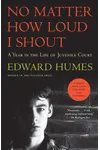
- First Read: No Matter How Loud I Shout (1996). This PEN Award-winning book is Humes’s masterpiece. By spending a year inside the chaotic Los Angeles juvenile court system, he exposes a broken machine through the intimate stories of troubled kids and the adults trying to save or prosecute them. It is the perfect showcase of his style.
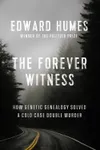
- Second Read: The Forever Witness (2022). Jump to his modern true-crime investigation to see how cutting-edge genetic genealogy solved a cold-case double murder from 1987. It reads like a high-tech thriller and shows how much forensic science has evolved.
- Third Read: Burned (2019). Follow this up with a frustrating but gripping look at junk science in the courtroom, detailing the fight by the California Innocence Project to free a wrongfully convicted mother.
The Environment & Sustainability Path
For readers interested in how human habits shape the planet, Humes’s environmental books offer a sobering yet surprisingly hopeful guide to green solutions and the crisis of waste.
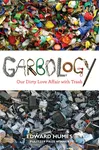
- First Read: Garbology: Our Dirty Love Affair with Trash (2012). A fascinating, witty, and alarming look at what we throw away, tracing the journey of trash and revealing that the average American generates 102 tons of waste in a lifetime. It is a staple of college reading programs.
- Second Read: Total Garbage: How We Can Fix Our Waste and Heal Our World (2024). Read this immediately after Garbology. It serves as a direct thematic update, focusing on how systemic waste fuels climate change and offering practical upgrades for individuals to fight back.
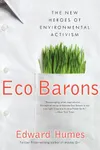
- Third Read: Eco Barons (2009). A look at the dreamers and eccentric millionaires who are using their private wealth to buy up lands and fight environmental destruction.
Thematic Reading Lists and Publication Order
For readers who want to dive deep into a single subject, here is the complete breakdown of Humes's books categorized by their primary themes and ordered by publication year.
True Crime and Criminal Justice Books
Humes’s work in this category goes beyond sensationalism; he uses specific crimes to examine broader societal failures, prosecutorial power, and forensic reliability.
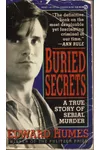
- Buried Secrets: A True Story of Serial Murder, Black Magic, and Drug-Running on the U.S. Border (1990) – An investigation into the infamous cult-related murders in Matamoros, Mexico. (Also released under the title Buried Secrets: A True Story of Serial Murder in 1991).
- Murderer with a Badge (1992) – The dark, true story of a decorated LAPD officer who led a double life as a contract killer and robber.
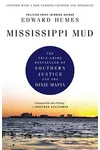
- Mississippi Mud: Southern Justice and the Dixie Mafia (1994) – Traces the corrupt landscape of Biloxi, Mississippi, following the assassinations of a judge and his politician wife, and their daughter's relentless search for the truth.
- No Matter How Loud I Shout (1996) – The definitive account of the juvenile justice system.
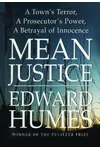
- Mean Justice (1999) – Set in Bakersfield, California, this book exposes how aggressive prosecutorial tactics and community fear can combine to convict innocent people.
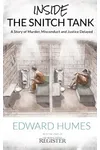
- Inside the Snitch Tank (2016) – Originally published as an investigative series for the Orange County Register, this work exposes the systemic, illegal use of jailhouse informants by law enforcement and prosecutors.
- Burned: A Story of Murder, Junk Science, and a Woman's Fight for Freedom (2019) – A deep dive into flawed arson forensics and wrongful convictions.
- The Forever Witness (2022) – An exploration of cold-case resolution via investigative genetic genealogy.
Environmental and Waste Systems
These books examine the hidden systems that keep modern society running—and the ecological toll they take.
- Eco Barons: The Dreamers, Schemers, and Millionaires Who Are Saving Our Planet (2009) – Profiles of wealthy conservationists purchasing land to protect it from development.
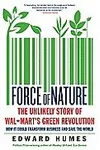
- Force of Nature (2011) – An inside look at how Walmart, under corporate pressure and environmental scrutiny, attempted to green its supply chain and cut operational waste.
- Garbology: Our Dirty Love Affair with Trash (2012) – An investigation into the American waste stream and the multi-billion dollar trash industry.
- Total Garbage: How We Can Fix Our Waste and Heal Our World (2024) – A guide to personal and systemic waste reduction.
Social Issues, History, and Medicine
These standalone investigative works cover education, evolutionary science, medical systems, and American history.
- Baby ER: The Heroic Doctors and Nurses Who Perform Medicine's Tiniest Miracles (2000) – A year spent inside a neonatal intensive care unit, detailing the high-stakes world of micro-preemie medicine.
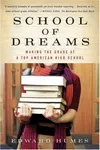
- School of Dreams: A Report from the Heart of American Education (2004) – Follows a year at Whitney High School, one of the most competitive public high schools in America, detailing the pressure on modern students.
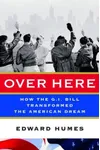
- Over Here: How the GI Bill Transformed the American Dream (2006) – A historical account of how the post-WWII GI Bill reshaped American society, education, and the middle class.
- Monkey Girl: Evolution, Education, Religion, and the Battle for America's Soul (2007) – A detailed narrative of the landmark Kitzmiller v. Dover Area School District trial over teaching intelligent design in public schools.
- A Man and His Mountain: The Everyman Who Created Kendall-Jackson and Became America's Greatest Wine Entrepreneur (2013) – The biography of Jess Jackson, exploring the business and agricultural realities of the wine industry.
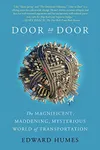
- Door to Door: The Magnificent, Maddening, Mysterious World of Transportation (2016) – Exposes the invisible global supply chain and the logistical networks that deliver products to our doorsteps.
What to Know Before You Start
Edward Humes writes with a highly immersive, character-driven style. He often spends months or even years embedded in the environments he documents, whether it is a juvenile courtroom, a neonatal ward, or a high school classroom. This means his books are highly detailed and prioritize human narratives over abstract statistics. Because his subjects are real people dealing with systemic issues, the books can sometimes be emotionally heavy, particularly his true crime and medical works. However, his environmental books like Total Garbage offer actionable advice, balancing out the systemic issues with practical optimism.