



Where to Start Reading Edward Llewellyn
For readers diving into the work of Edward Llewellyn (the pseudonym of British-Canadian scientist and physician Edward Llewellyn-Thomas), there are two primary entry points. Because his bibliography is relatively small but highly focused, choosing a path depends entirely on whether you prefer to watch a mystery unravel or read the history of his world in a strict, linear fashion.
The Publication Path (Highly Recommended)
If you want to experience the story the way readers did in the late 1970s and early 1980s, you should read the books in order of publication. This is the recommended route because it preserves the sense of discovery and mystery surrounding the collapsed world of the future.
- The Douglas Convolution (1979)
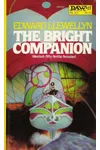
- The Bright Companion (1980)
- Prelude to Chaos (1983)
By starting with the first book, you are dropped into the 22nd century alongside a protagonist who is just as confused as you are. The third book, a prequel, then fills in the gaps, explaining the geopolitical and scientific failures that led to the collapse.
The Chronological Path
For readers who prefer a linear timeline without jumping back and forth through history, the chronological order rearranges the trilogy to put the prequel first:
- Prelude to Chaos (1983)
- The Douglas Convolution (1979)
- The Bright Companion (1980)
While this path makes the historical timeline of the crisis easier to follow, be warned that reading the prequel first reveals the causes and early stages of the global disaster immediately, which takes away some of the suspense and narrative tension built up in the opening pages of the original 1979 novel.
The Douglas Convolution Series: A Deep Dive
Llewellyn's signature contribution to speculative fiction is the Douglas Convolution series. The entire trilogy is bound together by a shared setting: a near-future Earth facing total societal collapse and human extinction due to widespread female infertility. This infertility is the tragic, unforeseen side effect of a widely distributed anti-cancer drug—a theme heavily inspired by Llewellyn's real-life academic background in pharmacology and medical ethics.
The Douglas Convolution (1979)
The series begins with The Douglas Convolution. The story follows Ian Douglas, a mathematician and former Marine from the year 1980 who stumbles into a "knot in time" (a natural wormhole) and finds himself propelled nearly two centuries into the future, landing in the year 2170. He discovers a fractured world where the ruins of the old United States are plagued by hostile gangs. Meanwhile, a highly organized, matriarchal Order of fertile women has seized control of the remaining scientific knowledge and infrastructure. Douglas's unique mathematical skills make him a critical asset to the Order as they struggle to save the human race from dying out.
The Bright Companion (1980)
Continuing in the same universe, The Bright Companion shifts the focus to a journey across the depopulated, dangerous landscape of this post-collapse world. The narrative explores the societal structures that have emerged in the wake of the crisis, detailing the extreme measures the matriarchal Order must take to regulate fertility and maintain order. It is a classic quest story that expands the geography and lore of Llewellyn's future Earth, showcasing how different factions have adapted to the collapse.
Prelude to Chaos (1983)
The final book published in the trilogy is a prequel. Prelude to Chaos takes readers back to the beginning of the end. It focuses on characters like Gavin Knox, a former presidential bodyguard, as they navigate the immediate political fallout, societal panic, and gradual breakdown of law and order when the drug-induced sterility crisis first comes to light. It is a tense, near-future political thriller that provides essential backstory to the state of the world seen in the first two novels.
The Standalone Space Operas
After finishing the Douglas Convolution trilogy, Llewellyn shifted his focus to broader science fiction themes, particularly first contact, interstellar travel, and cosmic politics. These standalones can be read in any order, though reading them in publication order is a great way to experience his growth as a writer.
Salvage and Destroy (1984)
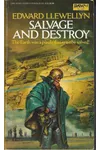
This gripping space opera introduces the Ultrons, an ancient and immortal alien species who monitor the galaxy. When humans accidentally discover an ancient interstellar beacon, the Ultrons send an agent named Lucian to Earth in human disguise. His mission is to locate and silence the beacon before humanity's primitive and aggressive space ambitions disrupt the galactic status quo. The book combines classic first-contact tropes with deep ethical discussions about human nature.
Fugitive in Transit (1985)
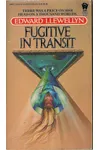
Published posthumously, Fugitive in Transit centers on the Galactic Transit Authority, an organization that polices cosmic pathways. The plot follows a woman who discovers a functioning "stargate" on Earth, making her the target of an interstellar manhunt. True to Llewellyn's style, the book features a highly intelligent, proactive female lead navigating complex bureaucratic and physical challenges across the stars.
Word-Bringer (1986)
Llewellyn's final posthumous novel, Word-Bringer, explores the consequences of sudden technological advancement. The story begins when a human protagonist discovers an alien device hidden on Earth. The device is designed to freely output vast amounts of advanced scientific data and physical laws. As different nations and corporations fight to control the device, the book dives into the geopolitical chaos and ethical dilemmas that arise when humanity is handed knowledge it is not yet socially mature enough to handle.
What to Know Before You Start: Themes and Style
Edward Llewellyn was the pen name of Edward Llewellyn-Thomas, a polymath who worked as an electrical engineer during World War II before becoming a medical doctor, psychologist, and university professor. His diverse academic background heavily shaped his fiction in several distinct ways:
- Scientific Realism: Rather than focusing on fantastical technology, Llewellyn's stories are grounded in real psychological concepts, medical ethics, and pharmacology.
- Strong Female Protagonists: Writing at a time when science fiction was often dominated by male-centric adventures, Llewellyn consistently populated his worlds with capable, professional, and intellectually active female characters who drive the plot forward.
- Heinlein Comparisons: Critics and readers often compare Llewellyn's muscular, direct prose style and his interest in political systems to the works of Robert A. Heinlein, though Llewellyn's work places a much greater emphasis on human factors and medical science.
- Standalone Nature: Beyond the shared setting of the Douglas Convolution trilogy, all of Llewellyn's books function well as self-contained stories with clear, satisfying conclusions.