




Where to Start Reading Elbert Hubbard
Elbert Hubbard's extensive catalog can be intimidating to navigate. Because he was an essayist, philosopher, and publisher rather than a novelist, there is no single narrative arc to follow. However, a structured approach will help you get the most out of his unique blend of rugged individualism, satire, and operational philosophy.
1. The Essential Starting Point: A Message to Garcia (1899)
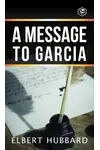
If you read only one piece by Elbert Hubbard, it must be this brief 1899 essay. First published in his periodical The Philistine, this tract celebrating initiative and self-reliance during the Spanish-American War became one of the most widely distributed pamphlets in history. It is the perfect introduction to his punchy, epigrammatic style and his core philosophy of proactive dedication.
2. The Biographies: Little Journeys to the Homes of the Great (1895–1910)
After finding your footing with his essays, you should dive into his defining lifetime project. This series consists of 180 biographical sketches originally issued as monthly pamphlets over fifteen years. Rather than dry history, these are highly subjective, witty, and philosophical portraits of historical figures. You do not need to read these in publication order; instead, pick the themed volume that aligns with your interest (e.g., painters, philosophers, or reformers).
3. The Philosophical Essays and Later Works
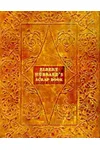
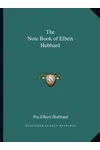
Once you are familiar with his biographical style, progress to his structured essays on lifestyle, society, and work. Collections like Love, Life & Work (1906) and White Hyacinths (1907) offer deeper insights into his philosophical views. Finally, explore the posthumously compiled collections like Elbert Hubbard's Scrap Book (1923) and The Note Book of Elbert Hubbard (1927), which gather his personal reflections, quotes, and reading influences.
Publication Order of Elbert Hubbard Books
For readers who want to trace the evolution of Hubbard’s thought from his early days as a soap salesman to his emergence as a prominent counter-cultural publisher, following his works in order of publication is a rewarding path. This list includes his early attempts at long-form fiction, his major essay collections, and key posthumous editions compiled by the Roycrofters:
- No Enemy But Himself (1894) – Hubbard's early novel about a wealthy man living as a tramp.
- Forbes of Harvard (1894) – A novel written in epistolary format exploring early academic and philosophical ideas.
- Little Journeys to the Homes of the Great (1895–1910) – His landmark 14-volume biographical series.
- A Message to Garcia (1899) – The world-famous motivational essay.
- Love, Life & Work (1906) – A collection of essays on business, personal growth, and co-existence.
- White Hyacinths (1907) – An essay tribute to his second wife, Alice Moore Hubbard, outlining his thoughts on love and partnership.
- The Doctors (1909) – A satirical play critiquing the medical establishment of his era.
- The Mintage (1910) – A collection of short stories and observations.
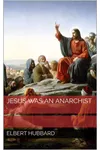
- Jesus Was An Anarchist (1910) – A controversial essay exploring Christian anarchism and pacifism.
- An American Bible (1911) – An anthology edited by Alice Hubbard featuring selections from Franklin, Jefferson, Paine, Emerson, and Hubbard himself.
- The Silver Arrow (1923) – A posthumously published collection of short writings.
- Elbert Hubbard’s Scrap Book (1923) – A popular posthumous assembly of quotes, poems, and excerpts that inspired Hubbard throughout his life.
- The Note Book of Elbert Hubbard (1927) – A collection of aphorisms, drafts, and journal entries.
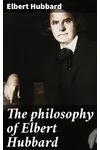
- The Philosophy of Elbert Hubbard (1930) – A compiled volume synthesizing his core intellectual tenets.
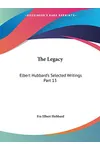
- The Legacy (1942) – A late archival collection printed by the remnants of the Roycroft community.
Decoding the 14 Volumes of Little Journeys
The definitive way to experience Hubbard's biographical output is through the standard 14-volume "Memorial Edition" of Little Journeys to the Homes of the Great, compiled after his death. Each volume groups together historical figures by their profession, offering a thematic reading experience:
- Volume 1: Good Men and Great – Profiles of George Eliot, Thomas Carlyle, John Ruskin, and Gladstone.
- Volume 2: Famous Women – Portraits of Elizabeth Barrett Browning, Madame de Staël, and Harriet Martineau.
- Volume 3: American Authors – Sketches of Emerson, Whitman, Everett, and secondary early American literary figures.
- Volume 4: American Statesmen – Assessments of Washington, Franklin, Jefferson, Lincoln, and Clay.
- Volume 5: Eminent Painters – Studies of Michelangelo, Rembrandt, Titian, and Fortuny.
- Volume 6: English Authors – Sketches of Shakespeare, Coleridge, Disraeli, and Byron.
- Volume 7: Eminent Orators – Highlights of Pericles, Antony, Burke, and Pitt.
- Volume 8: Great Philosophers – Summaries of Socrates, Seneca, Swedenborg, Spinoza, and Comte.
- Volume 9: Great Reformers – Analyses of John Wesley, Garibaldi, Cobden, Paine, and Knox.
- Volume 10: Great Teachers – Reviews of Moses, Confucius, Pythagoras, and Plato.
- Volume 11: Great Businessmen – Profiles of industrial titans, inventors, and organizers.
- Volume 12: Great Scientists – Insights into Copernicus, Newton, Darwin, and Haeckel.
- Volume 13: Great Lovers – Stories of famous historical pairings, including Dante and Beatrice, and Robert Browning and Elizabeth Barrett.
- Volume 14: Great Musicians – Essays on Wagner, Paganini, Mozart, Bach, Mendelssohn, Liszt, and Beethoven.
What to Know Before You Start
Elbert Hubbard's work belongs to the late-19th and early-20th-century American progressive and libertarian traditions. To enjoy his work, keep the following context in mind:
The Roycroft Press Style
Hubbard did not just write books; he designed them. Inspired by the Kelmscott Press of William Morris, his Roycroft Press in East Aurora, New York, printed hand-illuminated, leather-bound editions. If you are collecting physical copies, look for vintage Roycroft Press printings to appreciate the book-as-art philosophy that Hubbard pioneered.
Tone and Historical Accuracy Caveats
Hubbard's biographies in Little Journeys are not academic texts. He frequently blended historical fact with satire, fictionalized dialogue, and highly subjective tangents to make a moral or philosophical point. Read them for their literary style, humor, and philosophical insights rather than as strict historical references.
His Periodicals
Much of Hubbard's short work first appeared in his monthly magazines, The Philistine (1895–1915) and The Fra (1908–1915). These magazines contained critiques, poems, and epigrams that were later repackaged into his books. If you find vintage issues, they provide an authentic glimpse into the daily discourse of the Roycroft community.