








































Where to Start with Eleanor Arnason
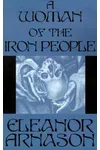
For readers new to Eleanor Arnason, the best place to begin is with her masterwork, the standalone novel A Woman of the Iron People (1991). This book won the inaugural James Tiptree Jr. Award and the Mythopoeic Fantasy Award, and it perfectly showcases her talent for speculative anthropology. It follows a Chinese-American anthropologist on a first-contact mission to an alien world, exploring cultural differences, gender roles, and societal structures with a style often compared to Ursula K. Le Guin.
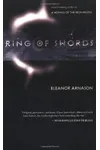
If you prefer to start with a series, your ideal gateway is Ring of Swords (1993), the anchor novel of her Hwarhath universe. Starting here introduces you to her most famous alien creation and sets up the themes explored in her subsequent shorter fiction.
The Hwarhath Universe
The Hwarhath stories constitute Arnason’s most celebrated body of work. The Hwarhath are an alien species with a highly structured society based on strict gender segregation and the norm of homosexual love. Because the series is comprised of one novel and numerous shorter works, there is no single rigid sequence, but reading the main novel first is highly recommended.
Recommended Hwarhath Reading Order
- Ring of Swords (1993): The core novel. It details the tense first-contact diplomacy between humanity and the Hwarhath, who view human heterosexual cohabitation and warfare as deeply bizarre and dangerous.
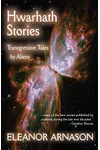
- Hwarhath Stories: Transgressive Tales by Aliens (2016): A comprehensive collection of her short stories and novelettes set in this universe. The stories are framed as translations of Hwarhath literature, complete with commentary by a fictional Hwarhath scholar.
Within the short fiction, notable individual pieces include "Dapple" (1999), which won the Spectrum Award and follows a Hwarhath actor and playwright, and "The Potter of Bones" (2002), a highly praised novella about a Hwarhath woman who discovers the principles of evolutionary biology. These are all collected in the 2016 volume, making it the most convenient way to experience the Hwarhath universe after reading the novel.
The Lydia Duluth Space Adventures
The Lydia Duluth stories follow a very different path, taking the form of episodic space adventures. Lydia Duluth is a location scout for Stellar Harvest, a massive galactic corporation that produces holographic entertainment ("holoplays"). In each story, Lydia travels to a new, exotic planet to search for filming backdrops, only to become entangled in local political intrigue, environmental crises, or alien mysteries.
Because these stories are episodic, they do not have a tight overarching plotline and can be read independently. However, reading them in publication order allows you to follow Lydia's career progression.
Lydia Duluth Publication Order
- "Stellar Harvest" (1999): The novelette that introduces Lydia and her corporate employer.
- "The Cloud Man" (2000): An adventure focusing on atmospheric science and planetary exploration.
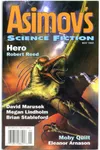
- "Moby Quilt" (2001): A Nebula Award finalist set on a water planet where scientists study giant, floating aquatic organisms.
- "Lifeline" (2001): A short story continuing Lydia's corporate scouting assignments.
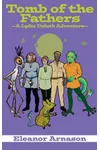
- Tomb of the Fathers: A Lydia Duluth Adventure (2010): A standalone novella published by Aqueduct Press that takes Lydia to a derelict space station.
- Checkerboard Planet (2016): A later story expanding the corporate lore of Stellar Harvest.
- "Tunnels" (2020): Published in Asimov's Science Fiction, this novelette finds Lydia investigating mysterious underground structures.
Standalone Novels & Collections
Before focusing primarily on short fiction in the 1990s and 2000s, Arnason wrote several notable standalone novels that showcase her early development as a writer:
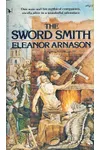
- The Sword Smith (1978): Her debut novel, a low-fantasy story tracking a master craftsman who rebels against the rulers of his world.
- To the Resurrection Station (1986): A quirky, gothic space opera featuring a decaying estate, artificial intelligence, and clone technology.
- Daughter of the Bear King (1987): A contemporary fantasy where a Minneapolis housewife discovers she is actually the daughter of a magical bear king from another dimension.
- A Woman of the Iron People (1991): Her landmark science fiction novel. (See the note below regarding the paperback split).
Other Notable Collections
- Mammoths of the Great Plains (2010): Part of PM Press's Outspoken Authors series, this book features an alternate-history novella where mammoths survived to co-exist with Native Americans, alongside an interview and a non-fiction essay.
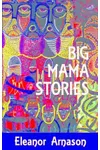
- Big Mama Stories (2013): A collection of satirical, tall-tale science fiction stories centering on nearly omnipotent, planet-hopping "Big Mamas" who clean up humanity's ecological and temporal messes. It was named to the James Tiptree Jr. Award Honor List.