
Where to Start: The Ideal Entry Point
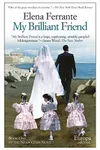
For the vast majority of readers, the best starting point is My Brilliant Friend, the opening volume of her critically acclaimed Neapolitan Novels. This saga is her definitive masterpiece and offers the most accessible entry point into her signature style: an intense, unflinching, and deeply intimate exploration of female friendship, identity, class, and social change in post-war Italy.
However, if you want a quicker introduction to her writing before committing to a four-part saga, you might start with one of her early standalone novels. The Days of Abandonment is a brief but incredibly powerful and claustrophobic novel that showcases her ability to dissect a character's psychological unraveling. It is ideal for readers who prefer raw, concentrated drama over sweeping, multi-decade epics.
The Neapolitan Novels (The Neapolitan Quartet)
The Neapolitan Novels form a single, continuous narrative following the lives of Elena Greco and Lila Cerullo from their childhood in a poor neighborhood of Naples in the 1950s through to the early 21st century. Because this is a chronological saga with a single storyline split across four books, you must read them in strict order.
- My Brilliant Friend (Italian: 2011 / English: 2012): Introduces Elena and Lila during their childhood and adolescence in Naples, establishing their complex bond and the violent, patriarchal neighborhood that shapes them.
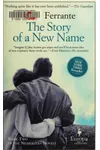
- The Story of a New Name (Italian: 2012 / English: 2013): Follows the two women into their youth and early twenties. Elena continues her education while Lila enters a volatile marriage, leading their paths to diverge and intersect in painful ways.
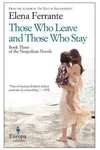
- Those Who Leave and Those Who Stay (Italian: 2013 / English: 2014): Set against the backdrop of the political turmoil, feminist movements, and social conflicts of the late 1960s and 1970s. Elena climbs the ladder of the literary world, while Lila works in a grueling industrial environment.
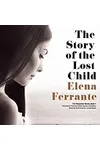
- The Story of the Lost Child (Italian: 2014 / English: 2015): The final, devastating installment covering their mature years, motherhood, career peaks, and the eventual culmination of their lifelong rivalry and love.
The Standalone Novels
Outside of her primary quartet, Elena Ferrante has written several standalone novels. While these can technically be read in any order, they fall into distinct groups based on publication history and thematic focus.
The "Cronache del mal d'amore" (Chronicles of Lovesickness)
In Italy, Ferrante's first three novels were eventually compiled into a single volume titled Cronache del mal d'amore (Chronicles of Lovesickness / Pain of Love). Although they feature entirely different characters and standalone plots, they share strong thematic ties, focusing on mother-daughter tensions, female self-discovery, and psychological crises.
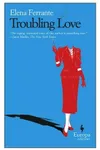
- Troubling Love (Italian: 1992 / English: 2006): Ferrante's debut novel. A dark, suspenseful mystery set in Naples, following a woman named Delia who returns to her hometown to investigate the mysterious drowning of her mother.
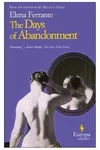
- The Days of Abandonment (Italian: 2002 / English: 2005): A fierce and turbulent portrayal of a mother of two who falls into a psychological tailspin after her husband abruptly leaves her.
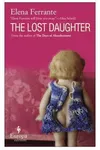
- The Lost Daughter (Italian: 2006 / English: 2008): Follows Leda, a middle-aged English professor on a solitary beach vacation, whose encounter with a young mother and child triggers memories of her own difficult choices as a young mother.
Later Standalone Novels
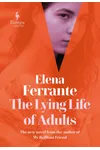
- The Lying Life of Adults (Italian: 2019 / English: 2020): Set in a divided 1990s Naples, this coming-of-age novel follows Giovanna as she transitions from childhood to adolescence, seeking her mysterious Aunt Vittoria and navigating the hypocrisies of her family.
The Beach at Night: A Dark Companion Piece
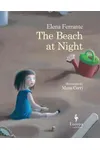
The Beach at Night (Italian: 2007 / English: 2016) is a short, illustrated children's book that serves as a direct companion piece to The Lost Daughter. In The Lost Daughter, the protagonist Leda steals a doll named Celina (referred to as Nani or Celine in some analyses) from a little girl on the beach. The Beach at Night is narrated from the perspective of that very same doll, detailing her scary experience of being left behind on the beach overnight. Due to its dark tone, it is often read and appreciated more by adult fans of Ferrante's main work than by children.
Non-Fiction and Essays
If you want to understand the mind behind the pseudonym, Ferrante has published three non-fiction volumes containing essays, letters, and reflections on writing:
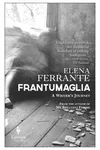
- Frantumaglia: A Writer's Journey (Italian: 2003, expanded in 2016 / English: 2016): A collection of letters, interviews, and essays detailing her decision to remain anonymous, her thoughts on writing, and her creative process.
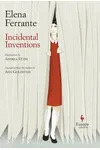
- Incidental Inventions (Italian: 2019 / English: 2019): A collection of short, illustrated essays originally written as weekly columns for the Guardian, covering topics ranging from friendship and aging to fears and writing habits.
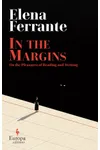
- In the Margins: On the Pleasures of Reading and Writing (Italian: 2021 / English: 2022): A compilation of four masterclasses/lectures discussing her development as a writer and her literary influences.
Chronological Publication Order
If you prefer to read her works in the exact order they were released, follow the list below. Note that her early works took much longer to be translated into English, resulting in a slightly different translation order (for example, The Days of Abandonment was translated before Troubling Love).
- Troubling Love (1992)
- The Days of Abandonment (2002)
- Frantumaglia (2003 — Non-fiction)
- The Lost Daughter (2006)
- The Beach at Night (2007 — Children's/Companion)
- My Brilliant Friend (2011)
- The Story of a New Name (2012)
- Those Who Leave and Those Who Stay (2013)
- The Story of the Lost Child (2014)
- Incidental Inventions (2019 — Non-fiction)
- The Lying Life of Adults (2019)
- In the Margins (2021 — Non-fiction)
What to Know Before You Start
First-time readers should be aware that Ferrante’s work is deeply grounded in Italian history and the unique culture of Naples. She frequently references the "Neapolitan dialect," contrasting it with standard Italian to highlight divisions in social class, education, and emotional expression. Her prose is highly psychological, dark, and often painful, but it is also famous for its narrative momentum. Finally, remember that Elena Ferrante is a pseudonym; the author has chosen to remain completely anonymous to allow her books to speak for themselves, a topic she explains in detail in her non-fiction collection, Frantumaglia.