


The Recommended Eliot Pattison Reading Order
Eliot Pattison is renowned for crafting complex, atmosphere-drenched mysteries that look closely at marginalized cultures and historical turning points. Instead of traditional whodunits, his works are rich, immersive journeys that blend suspense with deep cultural and political exploration. For readers new to Pattison, he offers two major entry points: the modern-day Tibetan mysteries of the Inspector Shan series, or the 18th-century historical adventures of the Bone Rattler series. Because both series feature deep character development and interconnected plots, the best way to read Eliot Pattison is in publication order. Starting from the beginning of either series allows you to experience the growth of the protagonists and the evolving political landscapes they navigate.
The Inspector Shan Series (Tibet Mysteries)
The Inspector Shan series is Pattison's most famous work, beginning with the Edgar Award-winning debut The Skull Mantra. The series follows Shan Tao Yun, a former high-ranking Beijing Justice Department investigator who was disgraced, imprisoned, and exiled to a forced labor camp in Tibet. The books are highly praised for their authentic and sensitive portrayal of Tibetan Buddhism, the daily struggles of the Tibetan people, and the harsh realities of Chinese occupation. Reading these in order is critical, as Shan's status, his relationships with the local monks, and his precarious standing with the authorities develop incrementally from book to book.
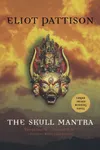
- The Skull Mantra (1999): Shan is introduced as a prisoner in a Tibetan gulag who is forced by a corrupt public security director to solve the decapitation of a government official. This book won the Edgar Allan Poe Award for Best First Novel.
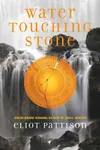
- Water Touching Stone (2001): Now unofficially released but still a fugitive, Shan travels to the remote northern plains of Tibet to investigate the systematic murders of teachers who were keeping Tibetan culture alive.
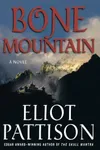
- Bone Mountain (2002): Shan is tasked with returning a sacred stone artifact to its rightful place on a remote mountain peak, navigating both Chinese military patrols and greedy Western collectors.
- Beautiful Ghosts (2004): Shan becomes entangled in a case involving international art smuggling, a long-hidden murder, and FBI involvement, highlighting the global exploitation of Tibetan relics.
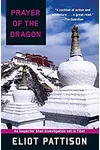
- Prayer of the Dragon (2007): Shan shelters in an isolated valley where a series of bizarre murders are blamed on a local outcaste, exploring themes of spiritual devotion and cultural isolation.
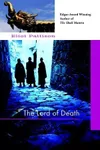
- The Lord of Death (2009): A murder on the slopes of Mount Everest forces Shan to investigate high-altitude tourism, smuggling, and corruption reaching into the highest echelons of government.
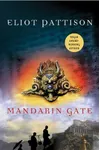
- Mandarin Gate (2012): Shan is drawn into the dark world of state-run construction projects, land displacement, and political protests in Lhasa.
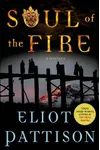
- Soul of the Fire (2014): Set against the backdrop of self-immolations and growing despair in Tibet, Shan investigates the death of a beloved local figure.
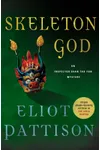
- Skeleton God (2017): Shan is sent to a remote monastery to investigate the discovery of ancient bones, leading to a clash between religious tradition and modern political greed.
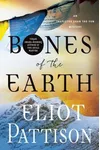
- Bones of the Earth (2019): The tenth and final installment of the series, where Shan faces his ultimate reckoning with his past and the authorities when an ancient tomb is threatened by a massive dam project.
The Bone Rattler Series (Duncan McCallum)
If you prefer historical fiction set closer to home, the Bone Rattler series (often called the Duncan McCallum mysteries) transport readers to the mid-18th century during the French and Indian War. The series follows Duncan McCallum, a young Scottish highlander exiled to the American colonies as an indentured servant after the Jacobite rebellion. McCallum's unique perspective—neither aligned with the British crown nor the French—allows him to forge deep alliances with Native American tribes, particularly the Iroquois. These novels are praised for showing the complex, messy birth of America through the eyes of immigrants and Indigenous peoples rather than sanitized textbook narratives. Read them in the order below to follow Duncan's path from prisoner to respected frontier tracker.
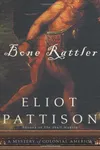
- Bone Rattler (2007): Duncan McCallum is aboard an indentured servant ship when a series of gruesome murders occur, establishing his role as a diagnostic thinker in a raw, violent new world.
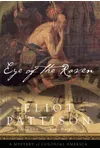
- Eye of the Raven (2009): Settled in the wilderness of New York, Duncan is hired to investigate the murder of an influential Seneca warrior, threatening the fragile peace between the tribes and the British.
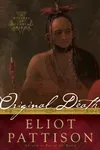
- Original Death (2013): Duncan investigates a series of brutal attacks on frontier settlements that appear to be part of a larger conspiracy to exterminate native tribes and seize their lands.
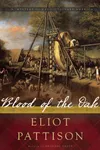
- Blood of the Oak (2016): Note that pre-publication databases sometimes list this book under the placeholder title Song of the Oak. It follows Duncan as he is kidnapped, enslaved in Virginia, and forced to uncover a conspiracy involving early American revolutionary committees.
- Savage Liberty (2018): Set in 1766, Duncan is caught between emerging Sons of Liberty factions and British military forces as he investigates a murder linked to a secret cache of arms.
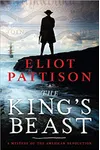
- The King's Beast (2020): Duncan travels to the southern colonies and the Bahamas to search for a legendary beast commissioned by King George, exposing colonial corruption and the horrors of the slave trade.
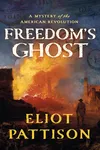
- Freedom's Ghost (2023): Set on the eve of the American Revolution, Duncan finds himself in Boston trying to prevent a conspiracy designed to ignite a premature and bloody war.
Hadrian Boone and Standalone Fiction
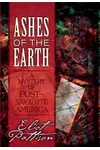
Aside from his two core historical mystery series, Eliot Pattison wrote Ashes of the Earth (2011/2012). This book is a major departure from his other works, venturing into a post-apocalyptic, dystopian future. The story centers on Hadrian Boone, an investigator living in the isolated colony of Carthage near the Great Lakes, thirty years after a nuclear holocaust. Although initially conceived as the first installment in a new series, no sequels have been published, making it a standalone read. For readers who enjoy Pattison's trademark blend of societal critique and investigation, it offers a fascinating look at how humanity rebuilds law and order from the ashes of destruction.
What to Know Before You Start
Before diving into Eliot Pattison's books, it is helpful to understand the unique characteristics of his writing. First, Pattison is an international lawyer by trade, which shows in his deep respect for human rights, international justice, and cultural preservation. His writing is incredibly detailed; he does not shy away from the harsh, violent realities of the settings he depicts, whether it is the torture cells of Tibet or the brutal conditions of indentured servitude in colonial America. The tone is respectful, serious, and deeply spiritual, matching the philosophies of the Tibetan monks and Native American leaders who inhabit his pages. Reading his books requires patience, as they are slower-paced than standard thrillers, prioritizing historical accuracy, political nuance, and cultural depth over quick action.