
How to Read Elisabeth Storrs's Books
Elisabeth Storrs has carved a distinct niche in historical fiction by bringing overlooked histories to life. Her most famous work, the A Tale of Ancient Rome series, explores the ancient clash between Republican Rome and the sophisticated Etruscan civilization. More recently, she has expanded her bibliography with a gripping historical novel set during World War II.
For the best reading experience, readers should follow the publication order of her ancient history books to appreciate the development of the characters and the mounting tensions of the Roman-Etruscan conflict. Her standalone World War II novel can be read at any time.
The Main Reading Order: A Tale of Ancient Rome
The core of Storrs's work is her trilogy set during the late fifth century BCE. The series centers on the conflict between the rising Republic of Rome and the nearby Etruscan city of Veii, told through the eyes of characters caught in the middle of cultural and military warfare.
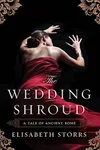
1. The Wedding Shroud (2010)
The story begins in 406 BCE. To seal a fragile truce, Caecilia, a young Roman girl raised in a highly conservative and austere society, is married off to Vel Mastarna, an Etruscan nobleman from the neighboring city of Veii. Expecting to live among barbarians, Caecilia is shocked to discover a highly advanced, sensual, and artistic culture where women are treated as equals. As she struggles with her loyalties to her homeland and her growing attachment to her new husband and his culture, she must navigate the complex political tensions under the watchful eye of the Etruscan priestess Tanaquil.
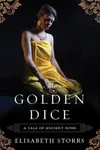
2. The Golden Dice (2013)
The second book picks up as war finally erupts between Rome and Veii. The narrative expands to follow multiple perspectives, including Pinna, a desperate Roman prostitute who uses her wits to survive, and Semni, an Etruscan servant girl caught in the chaos of military campaigns. As the siege of Veii begins, Caecilia faces betrayal, cultural clashes, and personal tragedies that test her resilience and her choice to embrace her Etruscan identity.
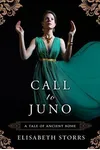
3. Call to Juno (2016)
The trilogy concludes with the final, dramatic years of the conflict. The Roman general Marcus Furius Camillus is determined to destroy Veii once and for all. Caecilia is forced to make the ultimate choice between her birth city and her adopted home, facing catastrophic loss and the harsh realities of ancient war. The book brings the historical saga to a powerful resolution, highlighting the human cost of empire-building.
The Companion Short Stories
In addition to the main trilogy, Storrs has written short fiction that enriches the historical setting of her ancient novels.
Dying for Rome: Lucretia's Tale (2014)
This short story serves as the first entry in the Short Tales of Ancient Rome series. It retells the legendary story of Lucretia, whose tragic death in 509 BCE sparked the rebellion that overthrew the Roman monarchy and established the Roman Republic. Set more than a century before the events of The Wedding Shroud, this tale explores the themes of power, honor, and female agency. It works beautifully as an introduction to Storrs's writing style or as a thematic companion piece to read after finishing the main trilogy.
A Shift in Era: Fables & Lies
In April 2026, Elisabeth Storrs published her first major departure from ancient Rome, turning her attention to the mid-twentieth century.
Fables & Lies (2026)
Developed under the working title Treasured, this novel is a standalone historical drama set in World War Berlin. The plot follows Freyja Bremer, a museum assistant who marries an SS scholar to protect her family. As she becomes disillusioned with the Nazi regime's manipulation of archaeology and history, she joins the resistance to safeguard the Trojan Gold (Priam's Treasure) during the final, chaotic days of the war. Just like her Roman books, this novel focuses on a strong female protagonist navigating intense moral gray areas and historical preservation.
Publication Order vs. Chronological Order
For readers who want to experience the progression of Roman history, the chronological layout differs slightly from the publication order due to the prequel setting of the Lucretia short story.
The Chronological Path:
- Dying for Rome: Lucretia's Tale (Set in 509 BCE)
- The Wedding Shroud (Set in 406 BCE)
- The Golden Dice (Set in the years following 406 BCE)
- Call to Juno (Concluding the siege of Veii up to 396 BCE)
The Recommended Path:
We recommend reading the main trilogy first (The Wedding Shroud, The Golden Dice, Call to Juno) to fully immerse yourself in the conflict of Veii, and then reading Dying for Rome as an extra slice of historical world-building. Fables & Lies can be enjoyed entirely independently of the Roman series.
What to Know Before You Start
Elisabeth Storrs's books are highly regarded for their historical accuracy and deep research. Before starting, keep these details in mind:
- Etruscan Sensibility: Storrs was inspired to write the series after seeing a photograph of a 6th-century BCE Etruscan sarcophagus showing a married couple embracing as equals. Her books heavily contrast the gender equality of Etruscan society with the patriarchal restriction of Republican Rome.
- The HNSA Connection: Beyond writing, Storrs is a co-founder and chairperson of the Historical Novel Society Australasia (HNSA), which promotes historical fiction and hosts the prestigious ARA Historical Novel Prize. Her deep connection to the historical writing community ensures a high standard of research.
- Tone: The series deals with mature themes including ancient warfare, slavery, and societal oppression, but balances these with rich prose, romance, and psychological depth.