



Where to Start with Elmore Leonard
Elmore Leonard—affectionately nicknamed 'Dutch' by his friends and fans—spent over six decades crafting some of the sharpest, leanest crime fiction and Westerns in American literature. With 48 novels and numerous short stories to his name, figuring out where to begin can feel daunting. Because Leonard rarely wrote conventional, long-running series, the vast majority of his books can be read as standalones. However, reading them in isolation means missing out on the brilliant, subtle web of character crossovers that connects his entire bibliography.
For readers brand new to his work, there are three primary entry points depending on your taste:
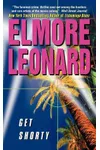
- The Standalone Crime Classics: Start with Get Shorty (1990) or Out of Sight (1996). These showcase Leonard at the absolute peak of his powers, featuring his signature razor-sharp dialogue, bumbling yet dangerous criminals, and cool-headed protagonists.
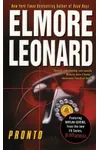
- The Raylan Givens Path: If you are a fan of the television series Justified, start with the novel Pronto (1993), which introduces the Stetson-wearing U.S. Marshal Raylan Givens.
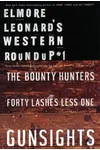
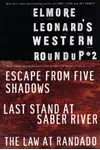
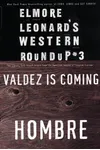
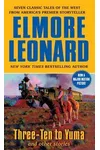
- The Western Roots: Before pivoting to modern crime, Leonard cut his teeth writing gritty, realistic Westerns. Hombre (1961) or the short story collection containing Three-Ten to Yuma are the perfect starting points for his early period.
The Interconnected 'Dutch' Universe: The Grand Crossover
While Leonard did not construct a rigid, chronological fantasy-style universe, he populated his books with recurring characters who frequently wandered into other stories. The most significant crossover web ties together several of his major books, effectively linking the Raylan Givens series, the Jack Foley series, and his standalone crime novels into a single narrative landscape. If you want to experience this grand crossover in the most rewarding order, follow this sequence:
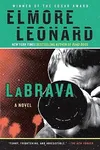
- LaBrava (1983): A standalone noir set in South Miami that introduces Cundo Rey, a charismatic and ruthless Marielito hitman.
- Pronto (1993): The first Raylan Givens novel, setting up the U.S. Marshal's career and his ties to both Florida and Kentucky.
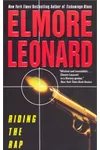
- Riding the Rap (1995): The second Raylan Givens novel. In addition to Raylan, this book introduces Dawn Navarro, a cunning psychic and con artist who plays a major role in the plot.
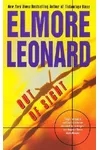
- Out of Sight (1996): The classic heist novel introducing the gentleman bank robber Jack Foley and U.S. Marshal Karen Sisco. It also features federal agent Ray Nicolette.
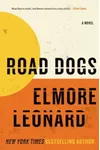
- Road Dogs (2009): The ultimate crossover novel. Leonard brings back Jack Foley (from Out of Sight), Cundo Rey (from LaBrava), and Dawn Navarro (from Riding the Rap). The three cross paths in California, linking these previously separate books into a unified storyline.
Other Crucial Character Duologies & Series
Beyond the main crossover web, Leonard wrote several smaller, self-contained series and character duologies that should be read in order to fully appreciate the character development.
Ordell Robbie & Louis Gara
This criminal duo first appeared in the late 1970s and returned over a decade later in one of Leonard's most famous works. Notably, the movie adaptations of these books—Quentin Tarantino's Jackie Brown and Dan Schechter's Life of Crime—share this exact continuity.
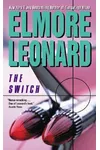
- The Switch (1978): Set in Detroit, this novel introduces a younger Ordell and Louis as they attempt a kidnapping that goes hilariously and dangerously wrong.
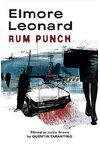
- Rum Punch (1992): Set years later, Ordell and Louis are operating in Florida, where they cross paths with flight attendant Jackie Burke (renamed Jackie Brown in the film adaptation) and federal agent Ray Nicolette.
Frank Ryan & Ernest 'Stick' Stickley
Though Leonard wrote a pair of books focusing on characters named Ryan, he confirmed that Frank Ryan and Jack Ryan are completely unrelated. However, Frank's partner, Ernest 'Stick' Stickley, becomes a major protagonist in his own right.
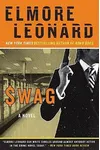
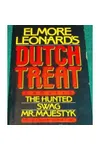
- Swag (1976): Also published under the title Ryan's Rules, this book follows used-car salesman Frank Ryan and Ernest 'Stick' Stickley as they execute armed robberies using a strict, ten-point code of conduct.
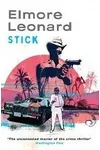
- Stick (1983): Following a prison stint, Ernest 'Stick' Stickley moves to Florida to try and go straight, only to get pulled back into the criminal underworld.
The Jack Ryan Duology
Unrelated to the Tom Clancy character or Frank Ryan, Leonard's Jack Ryan is a cynical drifter who finds himself in over his head.
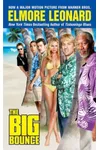
- The Big Bounce (1969): Jack Ryan is introduced as a small-time criminal working in Michigan.
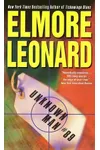
- Unknown Man #89 (1977): Ryan returns, now working as a process server in Detroit, where he becomes entangled in a search for a missing heir.
The Carl Webster Trilogy
For a historical perspective on Leonard's universe, this series follows Carl Webster, 'The Hot Kid' of the U.S. Marshal service, during the Prohibition and Depression eras.
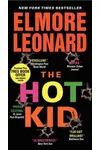
- The Hot Kid (2005): Explores Carl's rise to fame as he chases down bank robbers in the 1930s.
- Up in Honey's Room (2007): Set during World War II, Carl investigates German spies and Nazi sympathizers in Detroit.
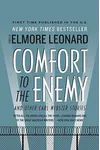
- Comfort to the Enemy (2009): A collection of stories further detailing Carl Webster's law enforcement career.
What to Know Before You Start
When diving into Elmore Leonard's bibliography, keep in mind his famous '10 Rules of Writing.' He believed in leaving out the parts that readers tend to skip, which means his prose is incredibly lean, fast-paced, and heavily reliant on dialogue. Don't expect long, flowery descriptions of scenery. Instead, let the characters' voices show you who they are.
Additionally, pay attention to the setting. Leonard's stories almost always bounce between the gritty urban landscape of Detroit, Michigan, and the sun-drenched, shady underbelly of South Florida. This geographic duality defines the tone of his crime universe, where the cold, hard streets of the Midwest constantly collide with the opportunistic chaos of the Sunshine State.