
How to Read Elon Green's Books: Recommended Reading Path
Because Elon Green writes standalone narrative true crime, there is no single, strictly chronological storyline to follow. However, for readers who want to experience the evolution of his investigative style and grasp his signature victim-centric approach, we recommend reading his books in order of their release. This allows you to see how his skills as a longform journalist translated into his award-winning debut and subsequent deep dive into New York City's complex cultural history.
1. Start with the Award-Winning Debut
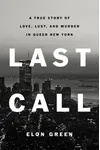
Your ideal entry point is Last Call: A True Story of Love, Lust, and Murder in Queer New York (2021). This book serves as the perfect introduction to Green's style because it establishes his focus on marginalized victims and his ability to construct a vivid historical era (1980s and 1990s New York City). It is both a gripping investigative procedural and a poignant social history of the LGBTQ+ community during the height of the AIDS crisis.
2. Move to his Cultural Investigation
Once you have finished Last Call, proceed to The Man Nobody Killed: Life, Death, and Art in Michael Stewart's New York (2025). This book takes you back to 1983 Manhattan to examine the tragic death of graffiti artist Michael Stewart and the cultural, legal, and artistic shockwaves it sent through the city. It pairs perfectly with his debut, shifting the focus from a serial predator to systemic injustice and police brutality in the New York art world.
Elon Green Books in Publication Order
If you prefer to tackle Elon Green’s bibliography strictly by publication order, here is the complete checklist of his standalone narrative non-fiction books:
- Last Call: A True Story of Love, Lust, and Murder in Queer New York (2021)
- The Man Nobody Killed: Life, Death, and Art in Michael Stewart's New York (March 2025)
Deep Dive: Exploring Elon Green’s Non-Fiction
To help you decide which book to read first, here is a detailed breakdown of each of Green's major works, their historical contexts, and what makes them unique.
Last Call (2021)
Published in March 2021, Last Call tells the harrowing story of the "Last Call Killer" (Richard Rogers), who targeted gay and bisexual men in New York City, New Jersey, and Pennsylvania throughout the late 1980s and 1990s. The killer would frequent piano bars in Manhattan, establish a rapport with his victims, and then murder and dismember them, leaving their remains in trash cans along highways.
What sets Green’s work apart is his deliberate choice to decenter the killer. Instead of focusing on the morbid details of the crimes or trying to dissect the mind of the perpetrator, the narrative dedicates significant space to honoring the lives of the victims—Peter Anderson, Thomas Mulcahy, Anthony Marrero, and Michael Sakara. Green paints beautiful, three-dimensional portraits of who these men were, their families, and their struggles. The book also details the heroic efforts of early queer activists, such as the NYC Anti-Violence Project, who fought against police apathy and societal indifference to bring the killer to justice during an era dominated by the AIDS epidemic.
The Man Nobody Killed (2025)
Released in March 2025, The Man Nobody Killed explores the tragic death of Michael Stewart, a 25-year-old Black artist, model, and graffiti writer who died in September 1983. Stewart was arrested by New York City Transit police for writing graffiti on a subway station wall and was subsequently beaten so severely that he fell into a coma and died thirteen days later. The subsequent trial of the officers involved resulted in no convictions, sparking widespread outrage.
In this book, Green meticulously re-examines the case, the ensuing legal battle, and the reactions of the metropolitan art community. Famous figures like Jean-Michel Basquiat, Keith Haring, and Andy Warhol were deeply moved and influenced by Stewart's death, which became a focal point for activist movements against police brutality in New York. Green's narrative provides a devastating look at systemic racism, the flaws of the legal system, and the cultural landscape of 1980s New York, highlighting Stewart's humanity and legacy rather than just his tragic end.
Anthologies and Curation
In addition to his full-length books, Elon Green is a prolific longform journalist and editor. If you want to explore more of his shorter pieces and curatorial work, keep an eye out for these publications:
- Unspeakable Acts: True Tales of Crime, Murder, Deceit, and Obsession (2020): Edited by Sarah Weinman, this true crime anthology features Green's notable essay, "The Lost Children of 'Runaway Train'". In this investigative piece, Green tracks down the real-life stories and fates of the missing children featured in the iconic 1993 music video for Soul Asylum's hit song "Runaway Train."
- Stories Can Save Us: America’s Best Narrative Journalists Explain How (2024): Written by Matt Tullis, this book features an in-depth interview with Green about his narrative style, his research methods, and his transition from journalism to longform true crime author.
- The Awl: The Book: An anthology collecting the best writing from the influential website The Awl, where Green was a frequent contributor, displaying his dry wit and editorial eye before the site shut down.
The HBO Adaptation: Last Call
In July 2023, HBO released a four-part documentary series titled Last Call: When a Serial Killer Stalked Queer New York, directed by Anthony Caronna. Elon Green served as an executive producer on the adaptation. The series was highly praised for mirroring the book’s ethical stance, prioritizing the voices of the victims' families, friends, and the queer activists who pushed for investigations rather than glorifying the serial killer. Watching the documentary series is highly recommended as a companion to the book, as it offers visual and archival context to the Manhattan nightlife and the political climate of the 1990s.
What to Know Before You Start
Before diving into Elon Green’s catalog, here are a few tips to keep in mind:
- Victim-Centric Narrative: Unlike sensationalist true crime podcasts or sensational books that emphasize the killer's motives, Green's work is deeply empathetic. He spends more time on the victims’ lives and the institutional failures that let them down than on the perpetrators.
- Heavy Themes: Both books cover intensely heavy subject matter, including homophobia, systemic racism, police violence, the AIDS crisis, and the grief of surviving families. Be prepared for emotionally challenging reads.
- Historical Context: Green’s books are as much historical accounts of New York City as they are crime stories. You will learn a lot about the city’s political, social, and art history during the late 20th century.