

The Recommended Reading Order
For the best reading experience, it is highly recommended to read Elsa Hart’s novels in their publication order. Because her signature series follows a continuous character arc and chronological timeline, the order in which the books were released perfectly aligns with the narrative flow. Below is the recommended sequence for tackling her library:
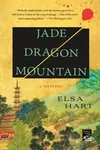
- Jade Dragon Mountain (2015) — Start here to meet the exiled scholar Li Du in the border town of Dayan.
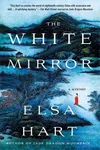
- The White Mirror (2016) — Follow Li Du as he joins a trade caravan heading toward Lhasa and encounters a winterbound mystery.
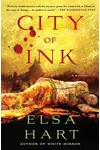
- City of Ink (2018) — Journey with Li Du to Beijing as he finally confronts his past, his exile, and the fate of his mentor.
- The Cabinets of Barnaby Mayne (2020) — Step away from China and cross the globe to 1703 London to follow a new protagonist, the botanist Cecily Kay, in this award-winning standalone historical mystery.
The Li Du Series in Detail
The centerpiece of Elsa Hart's work is the Li Du trilogy. Set in early 18th-century China during the Qing Dynasty, the series offers a masterful blend of detective work and political intrigue. Here is what you need to know about each installment:
1. Jade Dragon Mountain (2015)
Set in 1708, the novel introduces us to Li Du, an imperial librarian who was exiled from Beijing during a political purge. He has spent five years wandering and arrives in Dayan (modern-day Lijiang, Yunnan province), a remote town near the Tibetan border where his cousin is the local magistrate. The city is in a state of high tension as it prepares for a historic visit from the Emperor Kangxi. When a Jesuit astronomer is found dead, Li Du's scholar mind is put to the test. He must navigate the complex dynamics of foreign missionaries, imperial officials, and local tea merchants to uncover a conspiracy that reaches the highest levels of power.
2. The White Mirror (2016)
Following the dramatic events in Dayan, Li Du is once again on the move, this time traveling with a trade caravan bound for Lhasa. However, a sudden detour due to harsh winter weather forces the travelers to seek shelter in a remote, snow-covered valley. The peace of their refuge is shattered when they discover the body of a monk floating in a canal with a mysterious symbol painted on his chest. Cut off from the outside world by snow, Li Du must investigate the dark secrets hidden within the valley's isolated estate before the killer strikes again.
3. City of Ink (2018)
In the final volume of the trilogy, Li Du’s journey brings him back to the heart of the empire: Beijing. He is no longer just running from his exile; he is actively seeking answers regarding the execution of his beloved mentor. Operating in the shadows of the capital, Li Du investigates a double murder that is tied directly to the conspiracy that originally ruined his life. The novel concludes the main narrative threads of Li Du's exile and provides a satisfying resolution to his personal quest for justice.
Expanding into London: Standalone Mystery
After completing the Li Du trilogy, Elsa Hart pivoted to a different setting and protagonist, demonstrating her versatility in historical fiction.
The Cabinets of Barnaby Mayne (2020)
Set in London in 1703, this novel introduces Cecily Kay, a curious botanist with a passion for cataloging the natural world. She is invited to inspect the legendary "cabinets of curiosities" belonging to the wealthy collector Barnaby Mayne. When Mayne is murdered in his own gallery and a young assistant is accused of the crime, Cecily is convinced that the local authorities have arrested the wrong man. Using her keen powers of observation and scientific classification, she begins sorting through the eccentric collector's acquisitions to trace the true killer. The book won the prestigious Simon & Schuster Mary Higgins Clark Award at the 2021 Edgar Allan Poe Awards.
What to Know Before You Start
Elsa Hart’s writing is heavily inspired by her own international upbringing and travel. Having lived in Lijiang, China, near the historic Tea Horse Road, she brought authentic local details, geography, and cultural atmosphere to the Li Du series. Readers will find that the books read less like fast-paced thrillers and more like atmospheric, character-driven whodunits in the vein of classic authors like Agatha Christie, but with the meticulous historical depth of Hilary Mantel.
While the Li Du books can technically be read as standalone mysteries because each features a self-contained crime, reading them out of order is not recommended. The overarching story of Li Du's exile, his emotional development, and his eventual return to Beijing forms a cohesive trilogy that is best experienced from beginning to end.