


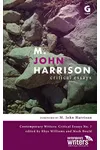
Picture a British storyteller who weaves worlds where reality and fantasy blur, crafting tales that linger like a haunting melody—meet M. John Harrison! Born in 1945, this genre-defying author has redefined science fiction and fantasy with his poetic prose and bold ideas. From the dreamlike cities of Viriconium to the cosmic mysteries of the Kefahuchi Tract, Harrison’s work challenges conventions and invites readers to rethink the boundaries of storytelling.
Known as a 'genre contrarian,' Harrison’s stories blend surreal imagery, psychological depth, and sharp social commentary. His influence spans decades, inspiring writers like Neil Gaiman and China Miéville. Ready to dive into a literary adventure that’s as thought-provoking as it is mesmerizing? Let’s explore the life and legacy of M. John Harrison!
The Making of M. John Harrison
Born on July 26, 1945, in Rugby, Warwickshire, to an engineering family, Michael John Harrison grew up with a fascination for the bizarre. As a teenager, he devoured works by Alfred Bester and Samuel Beckett, blending pulp sci-fi with literary absurdism. In 1966, his first short story appeared in Science Fantasy magazine, catching the eye of Michael Moorcock, editor of New Worlds. Harrison moved to London, joining the New Wave movement, where he wrote reviews under the pseudonym Joyce Churchill and critiqued the complacency of genre fiction. His early career also included scripting comic stories, showcasing his versatility.
Harrison’s passion for rock climbing, which he took up in the 1970s, profoundly shaped his writing. Seeking to reconnect with physical reality after years of fantasy, he explored gritty quarries and urban landscapes, experiences that infused his work with raw authenticity. This shift marked a turning point, steering his stories toward a sharper, more grounded style.
M. John Harrison’s Unforgettable Stories
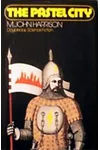
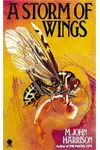
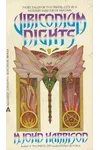
Harrison’s Viriconium sequence (1971–1984) is a cornerstone of modern fantasy. Beginning with The Pastel City, a science-fantasy tale set in a decaying, far-future city, the series evolves into surreal, poetic narratives like A Storm of Wings and In Viriconium. Unlike traditional fantasy, Viriconium resists fixed rules, its world shifting like a fever dream, reflecting Harrison’s disdain for rigid genre tropes.
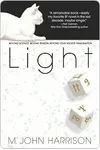
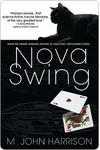
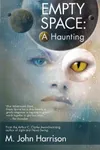
The Kefahuchi Tract trilogy—Light (2002), Nova Swing (2006), and Empty Space (2012)—is a dazzling blend of space opera and existential noir. Light, which won the James Tiptree Jr. Award, follows a physicist, a cyborg pilot, and a drifter linked by a mysterious entity, exploring themes of identity and cosmic wonder. Harrison’s prose, described as 'glacially beautiful,' weaves intricate narratives that challenge readers to embrace ambiguity.
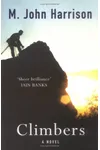
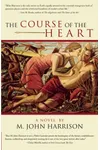
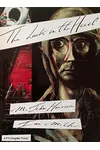
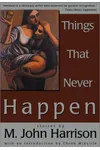
His 1989 novel Climbers, a semi-autobiographical work about rock climbing, won the Boardman Tasker Prize and marked a departure from speculative fiction. Meanwhile, The Course of the Heart (1992) delves into urban magic and loss, showcasing his ability to merge the mundane with the fantastical. Harrison’s short stories, collected in Things That Never Happen (2002), further highlight his haunting, evocative style.
Why M. John Harrison Matters
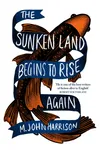
M. John Harrison’s impact on science fiction and fantasy is profound. As a New Wave pioneer, he pushed the genre toward literary sophistication, blending avant-garde techniques with speculative themes. His rejection of formulaic storytelling inspired a generation of writers to experiment boldly. Critics like Robert Macfarlane praise him as one of Britain’s finest novelists, genre aside, while his 2020 Goldsmiths Prize win for The Sunken Land Begins to Rise Again underscores his enduring relevance.
Harrison’s work resonates because it mirrors the complexities of human experience—alienation, yearning, and the search for meaning. By defying genre boundaries, he invites readers to question reality itself, making his stories both timeless and urgently contemporary.
About M. John Harrison
- Birth Date: July 26, 1945,_clients: M. John Harrison was born in Rugby, Warwickshire.
- Key Works: Viriconium, Light, Climbers, The Sunken Land Begins to Rise Again.
- Awards: James Tiptree Jr. Award (2002), Boardman Tasker Prize (1989), Goldsmiths Prize (2020).
Ready to explore a world where reality bends and imagination reigns? Snag Light or The Pastel City and dive into M. John Harrison’s mesmerizing blend of science fiction and fantasy!