


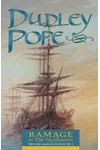
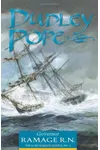


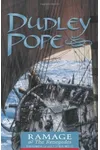




The Recommended Reading Order: Straight Down the Line
For readers setting sail with Lord Nicholas Ramage, the navigation plan is wonderfully simple. Unlike other nautical fiction franchises that jump back and forth in time, Dudley Pope wrote the Nicholas Ramage series in a strict sequence. The publication order matches the character's chronological career progression perfectly. To experience Ramage’s growth from a young, untested lieutenant under the shadow of his father’s court-martial to a confident, battle-hardened commander, you should start at the very beginning with the 1965 novel Ramage.
Nicholas Ramage Books in Publication and Chronological Order
Here is the complete chronological sequence of Nicholas Ramage’s adventures, tracking his progress through the Royal Navy during the tumultuous Napoleonic Wars:
- 1. Ramage (1965): The series opener introduces a junior lieutenant who unexpectedly thrusts himself into command of the sinking frigate Sibella. He must rescue Italian nobles from Napoleon's approaching army, setting the stage for his signature style of daring initiative.
- 2. Ramage and the Drumbeat (1967): Taking command of the cutter Kathleen, Ramage is tasked with capturing a Spanish warship and gathers vital intelligence just before the historic Battle of Cape St. Vincent.
- 3. Ramage and the Freebooters / The Triton Brig (1969): Published as The Triton Brig in the United States, this novel follows Ramage as he takes command of the brig Triton to deal with mutinous crews and pirate threats in the Caribbean.
- 4. Governor Ramage R.N. (1973): Ramage finds himself in a combined naval and diplomatic role, protecting British merchant shipping and navigating the complex political waters of the West Indies.
- 5. Ramage's Prize (1974): A suspenseful mystery on the high seas, where Ramage must track down missing mail packets and protect vital communications lines during the French blockade.
- 6. Ramage and the Guillotine (1975): Sent on a top-secret espionage mission, Ramage slips into Bonaparte's France to investigate rumors of an invasion force being assembled along the coast.
- 7. Ramage's Diamond (1976): Commanding the frigate Juno, Ramage orchestrates a brilliant blockade of the French-held island of Martinique, utilizing the famous Diamond Rock as a naval stronghold.
- 8. Ramage's Mutiny (1977): Ramage is ordered to recover a British frigate that has been seized by mutineers and handed over to the Spanish in South America.
- 9. Ramage & the Rebels (1978): Stationed in the Caribbean, Ramage hunts down ruthless pirates and handles a delicate rebellion that threatens British colonial interests.
- 10. The Ramage Touch (1979): Operating in the Mediterranean, Ramage uses unorthodox tactics to disrupt French shipping lines and outmaneuver superior naval forces.
- 11. Ramage's Signal (1980): Ramage leads a daring raid along the French and Spanish coastlines, destroying vital semaphore signaling stations to blind the enemy's communication network.
- 12. Ramage & the Renegades (1981): During the brief and fragile Peace of Amiens, Ramage is sent to investigate a mysterious colony in the south Atlantic, only to find himself in a race against French expansion.
- 13. Ramage's Devil (1982): When hostilities resume, Ramage is trapped in France and must execute a daring escape to return to the sea and protect British merchants from privateers.
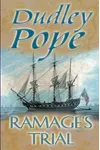
- 14. Ramage's Trial (1984): Facing accusations from political enemies, Ramage must defend his honor and career in a tense naval court-martial.
- 15. Ramage's Challenge (1985): Slipping back into the Mediterranean, Ramage goes on a rescue mission to save British hostages held captive by Napoleon's regime.
- 16. Ramage at Trafalgar (1986): The emotional peak of the series, placing Ramage and his crew directly into the heart of Admiral Nelson's legendary victory over the combined French and Spanish fleets.
- 17. Ramage and the Saracens (1988): Sent to the Mediterranean once more, Ramage faces Barbary corsairs threatening shipping lanes and coastal settlements.
- 18. Ramage & the Dido (1989): The final novel in the series sees Captain Ramage taking command of the massive HMS Dido for a cruise in the West Indies, bringing Dudley Pope's naval saga to a satisfying conclusion.
What to Know Before You Start: Dudley Pope’s Historical Authenticity
Dudley Pope was not just an author of historical fiction; he was a highly respected naval historian. His non-fiction works, such as Life in Nelson's Navy (1981) and Decision at Trafalgar (1959), are celebrated for their meticulous research. This academic background shines through in the Nicholas Ramage novels. Every piece of rigging, naval maneuver, and legal court-martial is written with absolute realism. Unlike some nautical series that romanticize life at sea, Pope captures the grit, disease, political infighting, and rigid hierarchy of the Georgian Navy while keeping the narrative fast-paced and accessible to lay readers.
Practical Reading Guidance: Standalones vs. Continuity
While each book features a self-contained mission or battle, readers will lose significant character development if they jump around. The secondary characters are a major highlight of the series and evolve alongside Ramage. His loyal crew—including the crusty master William Southwick, the brave American coxswain Jackson, and the Italian seaman Rossi—stay with him across multiple commissions. Furthermore, Ramage's long-running romance with Gianna, the Marchesa di Volterra, develops over several books and provides crucial emotional stakes that tie the early novels together.
Companion Works and Spin-Offs
If you finish the Nicholas Ramage series and crave more of Dudley Pope's writing, he also penned the Ned Yorke series. Set in the 17th century, this four-book series (comprising Buccaneer, Admiral, Galleon, and Corsair) follows a Royalist officer who turns to buccaneering in the Caribbean after the execution of King Charles I. Additionally, reading Pope's non-fiction historical accounts, particularly The Black Ship (detailing the famous mutiny on HMS Hermione), offers excellent background context for the real-life events that inspired Ramage's fictional exploits.