
The Roman Worlds of Alex Gough
Alex Gough has carved out a unique niche in historical fiction by taking readers away from the grand marble halls of emperors and plunging them directly into the gritty, dangerous streets inhabited by Rome's underclasses. While Gough maintains a day job as a partner in a veterinary practice in Bath, England, specializing in cardiology and writing medical textbooks, his nights are dedicated to historical research. His novels are highly regarded for their historical accuracy, visceral combat, and focus on the overlooked eras and social strata of the ancient superpower. Whether you want to follow a veteran-turned-watchman in the back alleys of Rome or a deadly spy navigating the lethal politics of the imperial palace, Gough offers a gripping, ground-level perspective.
Chronological Timeline vs. Publication Order
Gough's books are divided into distinct series, each focusing on a different era of Roman history. While he began publishing with his gritty street-level mysteries, his subsequent series moved back and forth through the timeline of the Roman world. Readers can choose between reading the books in the order they were written (publication order) or following the historical timeline of the Roman Republic and Empire (chronological order).
Chronological Order of Series Settings
If you prefer to read the series in the order that the historical events occurred, you should follow this sequence:
- The Mark Antony Series (Set during the late Roman Republic, covering Julius Caesar's campaigns, his assassination, and the subsequent civil wars, roughly 49 BC to 30 BC)
- The Carbo of Rome Series (Set during the early Roman Empire under the reign of Augustus and Tiberius, roughly early 1st century AD)
- The Imperial Assassin Series (Set during the chaotic and brutal Severan dynasty, following the reign of Septimius Severus and his sons, roughly late 2nd to early 3rd century AD)
For the best experience, however, most readers recommend tackling each individual series in its respective publication order. Because the characters and plots do not overlap directly between the three major series, you do not need to worry about cross-series spoilers.
The Mark Antony Series
This series moves away from fictional protagonists to follow one of the most famous, charismatic, and controversial figures in Roman history: Mark Antony. The series charts his rise from a cash-strapped soldier in Julius Caesar's legions to a powerful general, and ultimately to his tragic final clash with Octavian. It is an excellent choice for readers who enjoy grand military history, political maneuvers, and the dramatic collapse of the Roman Republic.
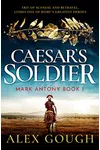
- Caesar's Soldier (2023) – Follows a young Mark Antony as he joins Caesar's campaigns in Gaul, forging the reputation and battlefield skills that would define his life.
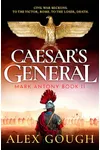
- Caesar's General (2024) – Focuses on the escalating civil war between Caesar and Pompey, with Antony serving as Caesar's indispensable, if volatile, second-in-command.
- Caesar's Avenger (2025) – Set in the chaotic vacuum left by the assassination of Julius Caesar, as Antony seeks to consolidate his power and hunt down the conspirators.
- Caesar's Nemesis (2026) – The final chapter, depicting Antony's alliance and romance with Cleopatra, his campaigns against Parthia, and his ultimate showdown with Octavian at the Battle of Actium.
The Carbo of Rome Series
This is where Alex Gough's fiction career began. The series stars Carbo, a retired legionary who returns to Rome after years of hard campaigning, only to find himself working as a watchman and investigator in the city's poorest and most dangerous neighborhoods. It reads like a gritty, historical noir, highlighting the criminal underbelly of the early Empire.
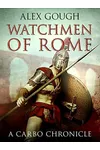
- Watchmen of Rome (2014) – Carbo returns to Rome and is recruited by the Nocturnes (the city watch), quickly becoming entangled in a conspiracy involving stolen relics and murder.
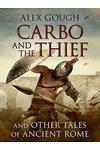
- Carbo and the Thief (2014) – A collection of short stories and novellas that flesh out Carbo's early investigations and life in the city. Chronologically, these fit well after the first novel.
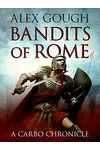
- Bandits of Rome (2015) – Carbo is sent out of the city and into the Italian countryside to track down a ruthless band of brigands harassing travelers.
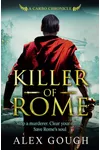
- Killer of Rome (2021) – Carbo faces his most personal challenge yet as he tracks down a serial killer operating in the shadow of the Colosseum.
The Imperial Assassin Series
Set during the reign of the Severan dynasty, this series follows Silus, a former Roman scout turned assassin and imperial agent. Operating in a time of extreme paranoia, civil wars, and imperial brutality, Silus must carry out high-stakes, covert missions for the throne while trying to keep himself and his loved ones alive.
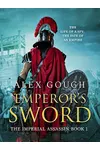
- Emperor's Sword (2019) – Silus is recruited into the shadows to track down conspirators threatening the Emperor's life.
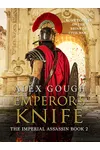
- Emperor's Knife (2019) – Silus travels to the northern frontiers, dealing with threats to the empire's borders and internal sabotage.
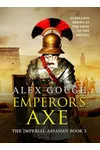
- Emperor's Axe (2020) – The agent is sent into the heart of Rome's political conspiracies, where loyalties are tested.
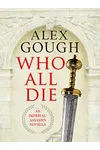
- Who All Die (2020) – A prequel novella focusing on a young Marcus Oclatinius Adventus, who later becomes the spymaster in the main novels, surviving a plague and enemy forces on the Parthian frontier.
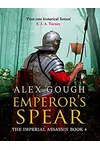
- Emperor's Spear (2021) – Silus must navigate the deadly power struggles between the emperor's sons, Caracalla and Geta.
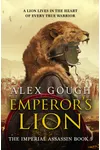
- Emperor's Lion (2022) – As the political climate grows even more dangerous, Silus is forced to take on an impossible mission in Rome's arena.
- Emperor's Fate (2022) – The dramatic conclusion to Silus's arc under the shadow of Caracalla's tyrannical rule.
Practical Reader Advice and Starting Points
If you are deciding where to start with Alex Gough's historical fiction, your choice should depend on the style of story you prefer. For fans of classic military campaigns, famous historical figures, and political drama, Caesar's Soldier is the ideal entry point. If you prefer street-level mysteries, noir investigations, and the perspective of common citizens, start with Watchmen of Rome. For fast-paced, high-stakes espionage and black-ops missions in the ancient world, begin with Emperor's Sword.
While the major series are distinct, the novels within each individual series rely heavily on continuous character growth and overarching plotlines. It is highly recommended to read each series in its numerical/publication order rather than attempting them as standalones. Side stories, such as the novella Who All Die, can be read in publication order (between books 3 and 4 of the Imperial Assassin series) or saved for after you finish the main books to gain deeper insight into the supporting characters.