











Where to Start with Andrew Taylor
With a career spanning over four decades, British mystery veteran Andrew Taylor has written everything from 1980s collegiate sleuth stories to gritty Restoration-era historical thrillers. Because his work is divided into distinct series, you do not need to read his entire catalog in one sitting. Instead, the best path depends on which era of history or style of suspense you want to explore first.
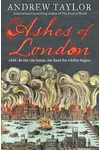
For fans of immersive historical fiction, the best place to start is The Ashes of London, the opening novel of the Marwood and Lovett series. If you prefer dark, psychological suspense, the award-winning Roth Trilogy (beginning with The Four Last Things) is his most acclaimed modern-era work. For a classic mid-century detective story, start with the Lydmouth series opener, An Air That Kills.
The Marwood and Lovett Series (Restoration England)
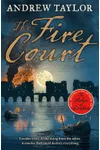
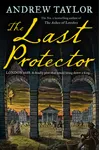
This is Taylor's most famous and popular sequence. Set in the immediate aftermath of the Great Fire of London in 1666, it follows James Marwood, a clerk with a complicated family history, and Cat Lovett, a young woman fleeing an unwanted marriage. Together, they navigate the treacherous politics, religious conflicts, and criminal underbelly of Charles II's Restoration court.
Unlike some of Taylor’s other works, this series must be read in chronological/publication order, as the characters age and the political landscape of London evolves over the years. A seventh volume, titled Treason, is scheduled for publication in early 2026, advancing the timeline by seventeen years to the events leading up to the Glorious Revolution.
- The Ashes of London (2016)
- The Fire Court (2018)
- The King’s Evil (2019)
- The Last Protector (2020)
- The Royal Secret (2022)
- The Shadows of London (2023)
- Treason (Expected 2026)
The Roth Trilogy: A Backward Puzzle
The Roth Trilogy (also published together as the omnibus volume Fallen Angel and adapted into a TV series of the same name) is a dark masterpiece of psychological suspense. The books trace a legacy of crime, religion, and madness within a specific community.
The unique feature of the Roth Trilogy is its structure: it was written and published in reverse chronological order. The narrative moves backward in time, with each subsequent book serving as an origin story that recontextualizes the events of the previous ones. While some readers try to read them chronologically, the trilogy is designed as a mystery puzzle to be unraveled backward. Therefore, we highly recommend reading them in publication order.
Publication Order (Recommended)
- The Four Last Things (1997) – Set in the 1990s, focusing on the kidnapping of a young girl.
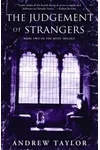
- The Judgement of Strangers (1997) – Set in the 1970s, exploring the background of the perpetrator.
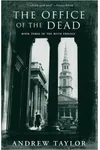
- The Office of the Dead (1999) – Set in the 1950s, detailing the ultimate roots of the tragedy.
Chronological Order
- The Office of the Dead (1999)
- The Judgement of Strangers (1997)
- The Four Last Things (1997)
The Lydmouth Series (1950s Post-War Mystery)
Set in a fictional town on the border of England and Wales during the drab, claustrophobic years of the 1950s, the Lydmouth series focuses on the professional and personal relationship between Detective Inspector Richard Thornhill and journalist Jill Francis. The books capture a changing British society dealing with the fallout of World War II. They should be read in order to appreciate the slow-burn relationship development between the leads.
- An Air That Kills (1994)
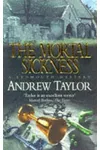
- The Mortal Sickness (1996)
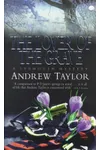
- The Lover of the Grave (1997)
- The Suffocating Night (1999)
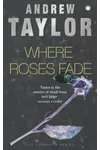
- Where Roses Fade (2000)
- Death's Own Door (2001)
- Call the Dying (2004)
- Naked to the Hangman (2006)
The William Dougal Series (1980s Crime)
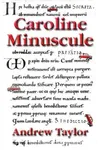
Taylor’s debut series introduced William Dougal, a cynical postgraduate history student in London who drifts into the world of crime, security work, and amateur sleuthing. The first book, Caroline Minuscule, won the CWA John Creasey Memorial Award. These are fast-paced, classic crime thrillers reflecting their late-20th-century setting.
- Caroline Minuscule (1982)
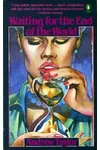
- Waiting for the End of the World (1984)
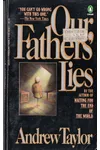
- Our Fathers' Lies (1985)
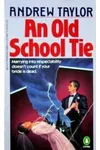
- An Old School Tie (1986)
- Freelance Death (1987)
- Blood Relation (1990)
- The Sleeping Policeman (1992)
- Odd Man Out (1993)
The Blaines Spy Trilogy
Focusing on the personal costs of espionage, the Blaines trilogy follows spies and their families rather than typical action-heavy missions. The story transitions from World War II to the final decade of the Cold War.
- The Second Midnight (1987) – Follows young Hugh Kendall surviving in Nazi-occupied Prague.
- Blacklist (1988) – Follows Ministry of Defence troubleshooter Eric Blaines during the Cold War.
- Toyshop (1990) – Investigates a suspicious death in London involving East German intelligence.
Standalone Historical Novels
Beyond his series, Andrew Taylor has written outstanding, standalone historical mysteries. Chief among them is The American Boy (published in the US as An Unpardonable Crime), which features a young Edgar Allan Poe during his brief childhood years in England. It won the CWA Historical Dagger and is widely considered one of Taylor’s finest works. These standalones can be read in any order.
- The American Boy / An Unpardonable Crime (2003)
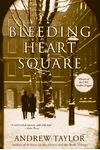
- Bleeding Heart Square (2008) – Set in 1930s London.
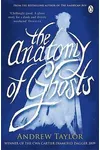
- The Anatomy of Ghosts (2010) – Set in 18th-century Cambridge.
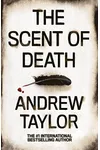
- The Scent of Death (2013) – Set in Manhattan during the American Revolutionary War.
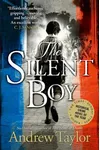
- The Silent Boy (2014) – Set during the French Revolution.
Important Caveats & Adaptations
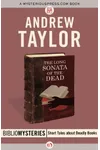
The Bibliomysteries Contribution: While bibliography lists often associate Taylor with a massive list of "Bibliomysteries" books, this is actually a multi-author project of standalone novellas. Taylor’s sole contribution to this collection is the short piece The Long Sonata of the Dead (2013). You do not need to read the other authors' books to enjoy it.
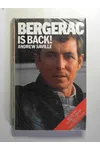
The Bergerac Books: In the 1980s, Taylor wrote several novelizations for the popular British TV detective show Bergerac. These are tie-in books and are not required reading for his main crime fiction catalog.