











Where to Start Reading Anthony Berkeley
For readers looking to dive into the work of Anthony Berkeley (the principal pseudonym of Anthony Berkeley Cox), choosing a starting point depends on whether you prefer classic, satirical detective puzzles or pioneering psychological suspense:
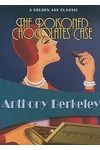
- The Masterpiece Entry Point: Start with The Poisoned Chocolates Case (1929). Widely considered Berkeley's masterpiece, this classic features a group of amateur sleuths offering six different solutions to a single murder. It serves as both a Roger Sheringham mystery and an Ambrose Chitterwick story, highlighting Berkeley's brilliant meta-commentary on the genre.
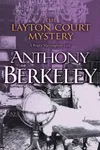
- The Traditional Detective Path: Start with The Layton Court Mystery (1925). This is Berkeley's debut novel, published anonymously, which introduces his long-running amateur sleuth Roger Sheringham in a classic locked-room setup.
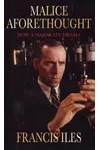
- The Psychological Suspense Path: Start with Malice Aforethought (1931), written under his pseudonym Francis Iles. This novel pioneered the "inverted mystery" subgenre, where the killer's identity is revealed on page one, and the narrative focuses entirely on the killer's psychology and the lead-up to the crime.
The Roger Sheringham Cases
Roger Sheringham is Anthony Berkeley's primary detective series. Sheringham is intentionally designed as the antithesis of the infallible Victorian detective; he is boisterous, talkative, frequently offensive, and often incorrect in his deductions until the final pages. The books are best read in order of publication to follow the development of his character and his partnership with Scotland Yard's Chief Inspector Moresby.
- The Layton Court Mystery (1925) – The debut case, featuring a suspicious suicide at a country house party.
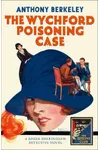
- The Wychford Poisoning Case (1926) – A case loosely inspired by the real-life Florence Maybrick trial, focusing heavily on character psychology.
- Roger Sheringham and the Vane Mystery (1927) – Set in a seaside village, this case deals with a suspicious death on a cliffside.
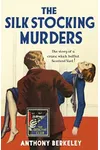
- The Silk Stocking Murders (1928) – A darker puzzle involving a series of apparent suicides among young women in London.
- The Poisoned Chocolates Case (1929) – The definitive crossover book where Sheringham's Crimes Club attempts to solve a murder that baffled Scotland Yard.
- The Second Shot (1930) – A meta-fictional puzzle that features a writer planning a murder during a parlor game.
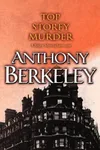
- Top Storey Murder (1931) – A classic London apartment mystery where Sheringham clashes directly with official police methods.
- Murder in the Basement (1932) – A mystery where the identity of the victim remains unknown for the first half of the book.
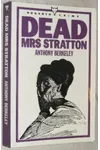
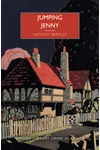
- Dead Mrs. Stratton (also published as Jumping Jenny) (1933) – A murder occurs during a fancy-dress party where the guests are dressed as famous murderers.
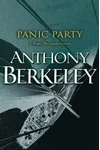
- Panic Party (1934) – A psychological mystery set on a private island, where a host stages a mock murder that turns real.
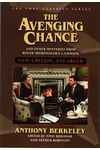
- The Avenging Chance and Other Mysteries (originally published across magazines; collected in book format in 2004) – The title story, "The Avenging Chance," is the famous short story that Berkeley expanded to create The Poisoned Chocolates Case.
The Ambrose Chitterwick Cases
Ambrose Chitterwick is a mild-mannered, self-effacing middle-aged man who serves as the complete opposite of the loud, overconfident Roger Sheringham. He appears as a major protagonist in three works:
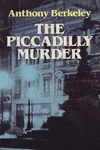
- The Piccadilly Murder (1929) – Chitterwick's debut, where he witnesses a poisoning in a London hotel lobby and sets out to prove the prime suspect's innocence.
- The Poisoned Chocolates Case (1929) – Chitterwick participates in the Crimes Club discussions and ultimately delivers the final, correct solution to the mystery.
- Trial and Error (1937) – A dark comedy where a terminally ill man decides to commit the perfect murder to benefit society, only for an innocent man to be convicted of the crime, forcing the real killer to try to prove his own guilt with Chitterwick's help.
The Francis Iles Psychological Crime Novels
Writing as Francis Iles, Cox abandoned the traditional puzzle format to invent the modern psychological thriller. These books focus on the dread, paranoia, and motives of the criminals rather than the investigation.
- Malice Aforethought (1931) – The story of a henpecked country doctor who methodically plans to murder his overbearing wife.
- Before the Fact (1932) – A chilling study of a woman who slowly realizes her charming husband is a murderer planning to kill her. This novel was adapted by Alfred Hitchcock into the classic 1941 movie Suspicion.
- As for the Woman (1939) – Berkeley's final novel, shifting from crime to a psychological drama detailing an affair between an undergraduate and an older married woman. The book's poor reception led to his retirement from writing novels.
The Detection Club Collaborations
As a founding member and driving force behind the Detection Club, Berkeley contributed to several famous collaborative works alongside writers like Agatha Christie and Dorothy L. Sayers. These are excellent side reads for fans of Golden Age mysteries:
- The Floating Admiral (1931) – A round-robin novel where Berkeley wrote the final chapter, tasked with resolving all the plot threads left by the previous thirteen authors.
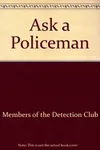
- Ask a Policeman (1933) – A parody where authors swapped characters. Berkeley wrote his section using Dorothy L. Sayers' famous sleuth, Lord Peter Wimsey.
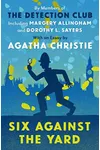
- Six Against the Yard (1936) – An anthology where six authors wrote stories attempting to describe a perfect murder, which were then reviewed and critiqued by a real Scotland Yard superintendent. Berkeley's contribution is "The Policeman Only Taps Once."
- The Scoop and Behind the Screen (1983) – Transcripts of collaborative radio serials broadcast by the BBC in 1930 and 1931, featuring chapters written by Berkeley.
Reading Caveats and Publication Notes
While the Roger Sheringham books follow a broad timeline, they are largely self-contained and can be read out of order without losing track of the plot. Chief Inspector Moresby serves as a recurring bridge, appearing across both the Sheringham and Chitterwick novels. Modern readers should note that several of Berkeley's novels have been republished under the British Library Crime Classics banner, a curation of classic Golden Age detective fiction by various authors. When navigating lists of this series, only titles such as The Poisoned Chocolates Case and The Piccadilly Murder are authored by Berkeley, while the rest are works by his contemporaries.