
Where to Start with Anthony Quinn
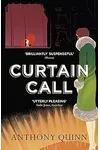
If you are new to Anthony Quinn’s historical fiction, the best place to begin is with Curtain Call (2015). This novel serves as the entry point to his only interconnected sequence of books—often referred to as the Curtain Call trilogy or the London sequence. It perfectly showcases Quinn's trademark style: a rich, atmospheric mystery set against a detailed historical backdrop with deeply human characters navigating social change.
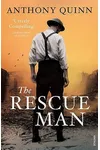
Alternatively, if you prefer a complete standalone experience right from the start, his award-winning debut, The Rescue Man (2009), is a brilliant choice. Set in wartime Liverpool during the Blitz, it captures the architectural beauty and tragic reality of a city under fire while delivering an intimate story of love and loss.
The Curtain Call Trilogy
While Anthony Quinn is primarily known for standalone historical novels, he wrote a loosely connected series of three books that follow recurring characters through different decades of mid-20th-century Britain. Although each book functions perfectly as a standalone story, reading them in order provides a rewarding look at the evolving social fabric of London.
1. Curtain Call (2015)
Set in London during the tense, uneasy atmosphere of 1936, this novel combines a theatrical murder mystery with political and social commentary. The plot centers on Nina Land, a West End actress who witnesses an attempted murder, drawing her into a dangerous web involving the "Tie-Pin Killer." In this book, readers are introduced to a minor character named Freya Wyley, who is the twelve-year-old daughter of Stephen Wyley, a portrait painter. It is the perfect setup for the transition into the next volume.
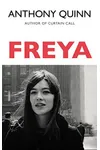
2. Freya (2016)
Starting on VE Day in 1945 and spanning the post-war decades, this novel moves the child from the first book into the spotlight. We follow the adult Freya Wyley and her competitive, complicated friendship with Nancy Holdaway as they navigate the challenges of pursuing careers as writers in a male-dominated post-war society. The novel explores themes of independence, ambition, and the changing role of women in mid-century England.
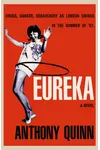
3. Eureka (2017)
The trilogy concludes in the summer of 1967 against the backdrop of the "Swinging Sixties." The plot focuses on the production of a mystery movie in London, capturing the artistic, social, and cultural shifts of the era. Freya Wyley reappears, now working as a seasoned journalist, linking the final book back to her beginnings in pre-war London. Reading these three novels in sequence offers a magnificent sweeping history of London across three decades.
Publication Order of Standalone Novels
Quinn's standalone books are not connected by plot or characters, meaning you can pick them up in any order that strikes your fancy. They are presented here in order of publication:
- The Rescue Man (2009): Quinn's debut novel is set in Liverpool during the 1939–1940 Blitz. It follows an architectural historian, Tom Baines, who is tasked with documenting the city's historic buildings before they are destroyed by German bombs, leading him into an unexpected romance. It won the Authors' Club Best First Novel Award.
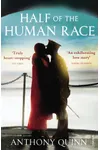
- Half of the Human Race (2011): Set in Edwardian England during the height of the women's suffrage movement, this novel explores the romance between Constance Richardson, an ardent suffragist, and Will Maitland, a traditionalist cricket captain. It is a powerful exploration of political conviction and personal compromise.
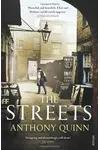
- The Streets (2012): Shortlisted for the prestigious Walter Scott Prize, this dark and vivid novel is set in the slums of Victorian London in the 1880s. It follows a young journalist who gets drawn into the criminal underworld while investigating the city's poorest neighborhoods.
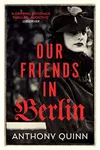
- Our Friends in Berlin (2018): A gripping World War II espionage thriller set during the London Blitz of 1941. The narrative follows a writer who is drawn into an MI5 counter-intelligence operation to root out British Nazi sympathizers, dealing with themes of trust, betrayal, and wartime paranoia.
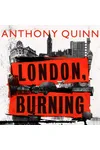
- London, Burning (2021): Set during the turbulent "Winter of Discontent" in late 1978 and early 1979, this novel follows several characters—including a theatre critic, a female police officer, and a politician—whose lives intersect during a period of massive political, industrial, and social upheaval in London.
- Molly & the Captain (2022): An ambitious, multi-generational story constructed as a triptych. It spans three centuries (the 1780s, the 1880s, and the 1980s), with each section connected by the legacy and mystery surrounding a fictional portrait of two sisters painted by a celebrated artist in Bath.
Anthony Quinn’s Non-Fiction Works
In addition to his historical fiction, Anthony Quinn has published non-fiction books that reflect his personal passions and interests. These works include:
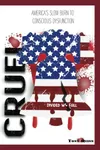
- Cruel: America’s Slow Burn to Conscious Dysfunction (2018): A sharp, analytical look at the political and cultural landscape of modern America, examining the systemic issues that have contributed to societal divisions.
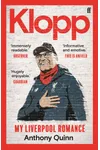
- Klopp: My Liverpool Romance (2022): A heartfelt tribute to Jürgen Klopp, the legendary manager of Liverpool Football Club. As a Liverpool native, Quinn combines personal memoir with sports journalism to capture what Klopp's tenure meant to the city and its fans.
What to Know Before You Start
When diving into Anthony Quinn’s bibliography, it is vital to avoid mixing him up with other individuals sharing the same name. First, he is distinct from the late Academy Award-winning Mexican-American actor Anthony Quinn (1915–2001), who wrote memoirs such as The Original Sin. Second, he should not be confused with the Irish crime fiction author Anthony J. Quinn, who is famous for his Inspector Celicius Daly mystery series (including books like Disappeared and Border Angels). The Anthony Quinn featured in this guide is the English historical novelist and former film critic for The Independent.
Quinn's writing style is heavily influenced by his background as a critic and his Classics education at Oxford. He is renowned for his meticulous research, which makes the historical settings feel alive without dragging down the narrative with excessive detail. His novels often weave real-world events and social movements—such as suffrage, wartime Blitz operations, and industrial strikes—into the intimate lives of his fictional characters.