





The Recommended Reading Paths
Bernard Malamud did not write serialized fiction or ongoing universes. Instead, his bibliography consists of distinct standalone novels and masterfully crafted short stories. Because his works range from gritty urban realism to surreal folklore and baseball mythology, your ideal starting point depends on what kind of story you want to experience. Here are three recommended paths to guide your journey:
Path 1: The Mythic and Famous Start (For Sports and Cinema Lovers)
If you want to begin with Malamud's most famous and culturally recognized work, start with his debut novel:
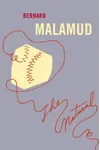
- The Natural (1952): A brilliant, tragicomic blend of Arthurian legend and American baseball. It introduces Roy Hobbs, a talented player whose career is derailed, only to get a second chance later in life. Note that the book's ending is significantly darker and more complex than the famous 1984 film adaptation starring Robert Redford.
Path 2: The Immigrant Realist Path (For Pulitzer-Caliber Drama)
For readers who want to experience Malamud's peak emotional realism and historical drama, follow this sequence:
- The Assistant (1957): Widely considered his most perfect novel, this story focuses on Morris Bober, a struggling Jewish grocer in Brooklyn, and Frank Alpine, a gentiles robber seeking redemption. It is a quiet, powerful study of guilt, moral growth, and empathy.
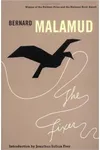
- The Fixer (1966): Malamud's most decorated work, which won both the Pulitzer Prize and the National Book Award. Based loosely on the real-life 1913 trial of Menahem Mendel Beilis, it follows Yakov Bok, a Jewish handyman in Tsarist Russia who is unjustly imprisoned for a ritual murder he did not commit.
Path 3: The Short Story Path (For Lovers of Concise Brilliance)
Malamud was arguably at his absolute best in the short fiction format. If you prefer short stories, start here:
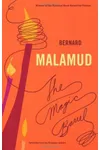
- The Magic Barrel (1958): His debut story collection and winner of the National Book Award. It contains classic tales of urban struggle, matchmakers, and magic realism, including the famous title story.
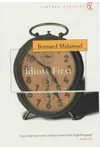
- Idiots First (1963): A collection containing some of his most surreal and heartbreaking short fiction, including "The Jewbird" and "Black Is My Favorite Color."
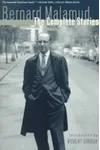
- The Complete Stories (1997): A posthumous collection assembling all fifty-five of his stories, perfect for readers who want to skip individual collections and read everything in chronological order.
Bernard Malamud's Standalone Novels in Publication Order
Reading Malamud in publication order allows you to witness his style evolve from the mythic realism of the 1950s, through the dark historical tragedies of the 1960s, to the increasingly experimental, satirical, and apocalyptic works of his later years.
- The Natural (1952): A baseball novel infused with wasteland motifs and quest narratives.
- The Assistant (1957): A bleak yet morally transcendent look at post-war Brooklyn grocery life.
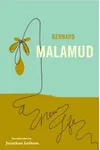
- A New Life (1961): A satirical, semi-autobiographical academic novel about Seymour Levin, a former alcoholic from New York who takes a teaching job in the Pacific Northwest.
- The Fixer (1966): A historical novel tackling antisemitism, endurance, and freedom under captivity in late Imperial Russia.
- Pictures of Fidelman: An Exhibition (1969): A novel in six linked stories tracking the comic and tragic misadventures of Arthur Fidelman, a failed painter from the Bronx who travels to Italy to find himself.
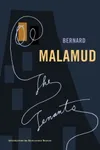
- The Tenants (1971): A claustrophobic, tense novel about the artistic rivalry and racial tensions between two writers—one Jewish, one Black—squatting in a decaying, otherwise abandoned tenement building.
- Dubin's Lives (1979): A dense, character-driven story about William Dubin, a middle-aged biographer who wrestles with marriage, aging, and an affair with a younger woman. Note: While some online databases record a 1977 publication date, the novel was officially published in 1979.
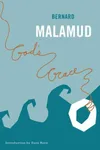
- God's Grace (1982): Malamud's final completed novel. It is an apocalyptic fable about Calvin Cohn, a paleoclimatologist who becomes the sole human survivor of a nuclear flood, left to rebuild a society with talking chimpanzees.
The Short Story Collections
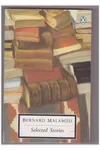
Malamud's short story collections are a vital part of his legacy. It is important to note that many databases contain data discrepancies regarding his early collection history. For instance, the entry "Selected Stories (1950)" is a modern database error; Malamud did not publish a story collection in 1950. His short fiction timeline is best understood through these major releases:
- The Magic Barrel (1958): Assembled his early 1950s magazine stories.
- Idiots First (1963): Expanded on his themes of moral duty and surrealism.
- A Malamud Reader (1967): A curated compilation of his works designed as an introduction for students and new readers.
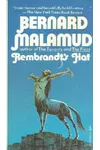
- Rembrandt's Hat (1973): Eight stories exploring the complexities of human relationships, art, and communication.
- The Stories of Bernard Malamud (1983): A retrospective collection curated by Malamud himself, containing twenty-five previously published stories plus two new ones.
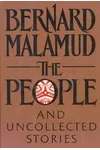
- The People and Uncollected Stories (1989): A posthumous volume featuring the unfinished novel The People (an allegory about a Jewish peddler adopted by a Native American tribe in the 19th century) along with fourteen uncollected stories.
- The Complete Stories (1997): The definitive compilation of his short fiction.
What to Know Before You Start
Malamud was a central figure in the post-WWII Jewish-American literary renaissance alongside Saul Bellow and Philip Roth. However, his work stands apart due to its unique blend of gritty urban realism and magical, fable-like folklore. His characters are often ordinary, working-class individuals trapped in literal or figurative cages who find redemption only through suffering, self-sacrifice, and moral responsibility toward others. Do not expect lighthearted reading; even his comedies carry an edge of melancholy and existential weight.