


The Perfect Entry Point: Where to Start Reading Charles Portis
With only five novels and a handful of shorter pieces to his name, Charles Portis has one of the most accessible catalogs in modern American literature. Yet, because each of his books possesses a highly distinct, deadpan flavor, choosing where to start can shape your entire experience of his work. Fortunately, readers have two excellent doorways into his writing.
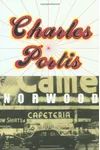
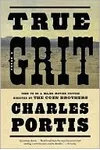
For the vast majority of readers, the definitive starting point is True Grit (1968). As Portis’s most famous novel, it introduces his signature dry humor, impeccable pacing, and unforgettable character voices. Narrated by the unflinching Mattie Ross, it serves as a masterclass in voice-driven fiction. If you prefer a lighter, breezier introduction to his style, his debut novel, Norwood (1966), is a fantastic alternative. It is a short, episodic road-trip comedy filled with eccentric Southern characters and a warm, low-stakes charm.
Charles Portis Books in Publication Order
Because Portis's novels are all standalones and do not share a single continuous universe, chronological reading order is not strictly necessary. However, reading his five novels in order of publication is highly recommended by fans. This sequence allows you to trace his stylistic evolution from the classic road-trip structure of his debut, through the historical grit of his masterpiece, and into the increasingly eccentric, satirical character studies of his later years.
1. Norwood (1966)
Portis's debut novel follows Norwood Pratt, a young, naive ex-Marine who travels from Ralph, Texas, to New York City to recover a seventy-dollar debt from an old army buddy. Norwood’s journey is populated by a delightful cast of oddballs, including a professional down-and-out, a dwarf who works in a circus, and a college-educated chicken named Joanne. It is a warm, funny picaresque tale that established Portis's talent for capturing the voices of ordinary, slightly off-kilter Americans.
2. True Grit (1968)
Set in the 1870s, this iconic Western is narrated by Mattie Ross, a forty-year-old woman looking back on the adventure of her youth. At age fourteen, Mattie set out into the Indian Territory to avenge her father’s murder. She enlists the help of Rooster Cogburn, a one-eyed, ruthless U.S. Deputy Marshal, and LaBoeuf, a talkative Texas Ranger. Written with a formal, King James Bible-inspired cadence, the novel is both a thrilling adventure and a hilarious, deadpan comedy that remains a cornerstone of American fiction.
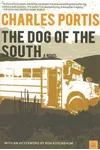
3. The Dog of the South (1979)
Eleven years after his breakout success, Portis returned with a novel that cemented his status as a cult favorite among writers. The story is narrated by Ray Midge, a pedantic copy editor who embarks on a wild chase from Arkansas to Honduras to retrieve his stolen Ford TorqueFlite, his credit cards, and his runaway wife. Along the way, he hooks up with Dr. Reo Symes, a rambling, delusional medical school dropout and con artist. The book is widely considered Portis's funniest, showcasing his mastery of the rambling, delusional monologue.
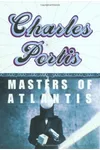
4. Masters of Atlantis (1985)
In this brilliant satire of secret societies, self-delusion, and institutional bureaucracy, Portis steps away from the road-trip format. The novel spans several decades, tracking Lamar Jervis, a man who is initiated into the "Gnomon Society" during World War I after receiving a mysterious, allegedly ancient codex. Jervis spends the rest of his life propagating the Gnomon secrets across the American Midwest, attracting a bizarre group of codependent disciples. It is a unique comic masterpiece that parodies the human urge to find order in nonsense.
5. Gringos (1991)
Portis’s final novel is set in the expatriate community of Mérida, Mexico. The protagonist, Jimmy Burns, is an ex-Marine and Korean War veteran who makes a living doing odd hauling jobs, looking for Mayan artifacts, and managing various eccentric expats. The plot meanders through search-and-rescue missions, UFO cultists, and archaeological digs. Critics and fans generally recommend saving Gringos for last, as its looser structure and more contemplative tone are best appreciated once you are already familiar with Portis’s comedic style.
Short Stories and Collected Editions
While his five novels form the core of his legacy, Portis also wrote several short stories, plays, and pieces of journalism that are well worth reading. In 2012, editor Jay Jennings compiled these rare pieces in Escape Velocity: A Charles Portis Miscellany. This collection includes his play Delray's New Moon, short stories like "I Don't Talk Service No More," and his early journalism for the New York Herald Tribune.
For readers who want the ultimate, definitive archive, the Library of America released Charles Portis: Collected Works in 2023. Also edited by Jay Jennings, this single-volume edition compiles all five novels, the complete stories, and a generous selection of his essays and journalism, making it the perfect resource for a complete reading marathon.
What to Know Before You Start: Tone and Adaptations
Before diving in, new readers should understand that Charles Portis is fundamentally a comic writer, but his humor is quiet, dry, and deadpan. He rarely writes obvious jokes; instead, the comedy emerges from the way his eccentric characters talk and justify their bizarre decisions. His books are deeply rooted in the American South, Southwest, and Mexico, capturing the sights, sounds, and distinct regional dialects of these landscapes with incredible accuracy.
If you are a fan of cinema, you may also want to explore the films inspired by his work. True Grit has been adapted twice: first in 1969, starring John Wayne in his only Oscar-winning role, and again in 2010 by the Coen brothers, who stayed much closer to the formal dialogue and dark tone of the original novel. His debut, Norwood, was also adapted into a movie in 1970, starring Glen Campbell and Kim Darby, capitalizing on their chemistry from the first True Grit film.