


































Where to Start Reading David Weber
David Weber is a titan of military science fiction, famous for his sprawling universes, meticulous tactical details, and strong-willed protagonists. For the vast majority of readers, the definitive starting point is On Basilisk Station, the 1992 novel that introduces naval officer Honor Harrington. It offers the perfect introduction to Weber's style: a blend of political intrigue, space combat mechanics, and character-driven drama.
If you prefer a mix of science fiction and high fantasy with themes of religious rebellion, your best entry point is Off Armageddon Reef, the opening novel of the Safehold series. For readers looking for fast-paced, ground-level military action, March Upcountry (co-authored with John Ringo) is an excellent, high-octane alternative.
The Honorverse: Reading Pathways
The Honor Harrington universe (or 'Honorverse') is Weber's flagship achievement. It has grown from a single series into a massive star-spanning saga with prequels, spin-offs, and anthologies. Navigating it can be daunting, but readers generally choose between two primary paths.
The Pure Main Series Order
If you want to focus entirely on Honor Harrington's direct career path, you can read the core novels in their publication order. This path is straightforward and avoids the complexity of juggling multiple subseries:
- On Basilisk Station (1992)
- The Honor of the Queen (1993)
- The Short Victorious War (1994)
- Field of Dishonor (1994)
- Flag in Exile (1995)
- Honor Among Enemies (1996)
- In Enemy Hands (1997)
- Echoes of Honor (1998)
- Ashes of Victory (2000)
- War of Honor (2002)
- At All Costs (2005)
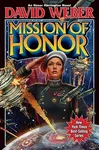
- Mission of Honor (2010)
- A Rising Thunder (2012)
- Shadow of Freedom (2013)
- Shadow of Victory (2016)
- Uncompromising Honor (2018)
The Hybrid/Publication Order (Recommended)
As the series progresses, the political landscape becomes incredibly complex, and Weber launched two critical spin-off series—the Saganami Island series and the Crown of Slaves series—that eventually merge back into the main storyline. Reading only the main books after Book 10 will leave you missing crucial context. To get the complete picture without spoiling major plot points, follow this hybrid reading sequence after completing War of Honor (Book 10):
- War of Honor (Main Series #10)
- Crown of Slaves (Crown of Slaves #1)
- The Shadow of Saganami (Saganami Island #1)
- At All Costs (Main Series #11)
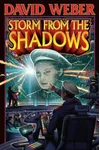
- Storm from the Shadows (Saganami Island #2)
- Torch of Freedom (Crown of Slaves #2)
- Mission of Honor (Main Series #12)
- A Rising Thunder (Main Series #13)
- Shadow of Freedom (Saganami Island #3)
- Cauldron of Ghosts (Crown of Slaves #3)
- Shadow of Victory (Saganami Island #4)
- Uncompromising Honor (Main Series #14 / core book #17 in the combined order)
- To End in Fire (Crown of Slaves #4)
Honorverse Prequels and Anthologies
Beyond the core timeline, the Honorverse features several prequel series and short story collections that enrich the lore:
- Manticore Ascendant Series: Starting with A Call to Duty, this prequel series co-authored with Timothy Zahn and Thomas Pope explore the early days of the Royal Manticoran Navy, centuries before Honor's birth.
- Star Kingdom (Treecat) Series: Beginning with A Beautiful Friendship, this series focuses on Honor's ancestor, Stephanie Harrington, and the first discovery of the empathic treecats.
- Worlds of Honor Anthologies: These short story collections (such as Changer of Worlds and What Price Victory?) contain canon-enriching stories written by Weber and other notable authors. They introduce characters and backstories that later reappear in the main novels.
Safehold: An Epic Narrative of Faith and Technology
Outside the Honorverse, Safehold is David Weber's largest solo series. Set on a distant planet where humanity has hidden from an aggressive alien threat by reverting to a pre-industrial society controlled by a hostile religious regime, the story follows a disguised android holding the mind of a starship officer who seeks to reawaken human progress. The Safehold series should be read strictly in publication order:
- Off Armageddon Reef (2007)
- By Schism Rent Asunder (2008)
- By Heresies Distressed (2009)
- A Mighty Fortress (2010)
- How Firm a Foundation (2011)
- Midst Toil and Tribulation (2012)
- Like a Mighty Army (2014)
- Hell's Foundations Quiver (2015)
- At the Sign of Triumph (2016)
- Through Fiery Trials (2019)
Collaborations and Other Worlds
Weber is a prolific collaborator, bringing his signature strategic depth to various co-authored universes:
- Empire of Man: Co-authored with John Ringo, this popular series follows Prince Roger and his elite guards shipwrecked on a hostile alien jungle world. Read the core sequence starting with March Upcountry, followed by March to the Sea, March to the Stars, and We Few.
- Starfire: Co-authored with Steve White and based on the tactical board game, this series starting with Insurrection features grand-scale interstellar wars against alien threats.
- Gordian Division: Co-authored with Jacob Holo, this series starts with The Gordian Protocol and dives into time travel and multiverse preservation.
- Out of the Dark: This series, starting with Out of the Dark and continued with Chris Kennedy (Into the Light, To Challenge Heaven), presents a brutal alien invasion of Earth where humanity finds help in an unexpected, supernatural way.
- The War God Series: A rare foray into pure high fantasy, starting with Oath of Swords, which follows the adventures of Bahzell Bahnakson, a warrior champion of the god of justice.
- Dahak Trilogy: A classic solo space opera where the Earth's moon is actually a disguised starship. Read starting with Mutineers' Moon.
- Ring of Fire (1632 Series): A collective alternate history project created by Eric Flint. Weber co-authored key early mainline novels including 1633 and 1634: The Baltic War.
Reader Advice: What to Know Before You Start
David Weber's books are known for their massive scale, political maneuverings, and detailed explanations of fictional physics, economics, and logistics. Readers should expect significant world-building exposition (often referred to by fans as 'infodumps'). If you enjoy complex political chess games, realistic naval tactical battles transposed into space, and long-term character arcs, Weber's style will be highly rewarding. However, if you prefer fast, light reads, you may find his detailed breakdowns of missile dynamics and parliamentary debates slow-paced. Patience is rewarded with some of the most satisfying military science fiction climaxes ever written.