

The Hook: Small-Town Realism from a Real-Life Deputy
Before he ever sat down to type a manuscript, Donald Harstad spent twenty-six years in law enforcement, serving as a deputy sheriff and chief investigator for Clayton County in northeastern Iowa. When he transitioned to writing, he brought that raw, unembellished authenticity with him. Instead of high-tech forensics labs or glitzy urban detectives, Harstad’s novels plunge readers into the fictional Nation County, Iowa—a sparsely populated landscape of cornfields, gravel roads, and close-knit communities where everyone knows your business, including your secrets.
The center of this universe is Deputy Sheriff Carl Houseman. Houseman is a middle-aged, coffee-swilling investigator who has seen it all but maintains a dry, self-deprecating sense of humor. The strength of Harstad's novels lies in their documentary-like precision. You get the meticulous details of police procedures: the endless paperwork, the static-heavy radio chatter, the turf wars with state investigators, and the quiet boredom of late-night patrols, abruptly shattered by sudden, shocking violence.
The Recommended Reading Path
Because the Carl Houseman series follows a linear progression of Houseman’s career, relationships, and the changing dynamics of the Nation County Sheriff's Department, it is highly recommended to read the books in publication order. The characters age, reference previous cases, and build on their shared experiences. Starting with the first book is essential to understanding the history of the department and the dry camaraderie between Houseman and his colleagues.
The Carl Houseman Series in Publication Order
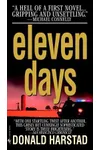
- Eleven Days (1998): The debut novel that launched Harstad's writing career (reportedly drafted in just eleven days). Carl Houseman is called to a remote farmhouse where he discovers a horrific scene of multiple mutilated bodies. What initially appears to be a small-town homicide quickly spiral into a complex, eleven-day investigation involving state authorities, local panic, and the dark underbelly of a suspected satanic cult operating in the heartland. This book was nominated for the prestigious Anthony Award for Best First Novel.
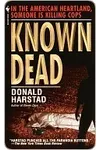
- Known Dead (1999): In the second installment, the violence hits closer to home. An ambush in an Iowa marijuana patch leaves a local doper and a state trooper dead. As federal agents and state investigators descend on Nation County, Houseman is caught in the middle of a tense investigation that uncovers a heavily armed, paranoid splinter group of right-wing extremists operating right under the county's nose.
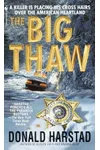
- The Big Thaw (2000): Set during a brutal, sub-zero Iowa winter, Houseman investigates a series of burglaries at unoccupied summer homes. The case turns deadly when the frozen bodies of two brothers are discovered in a farm machinery shed, executed with automatic weapons. Houseman and his partner, Hester Gorse, are drawn into a web of conspiracy that leads back to a riverboat casino on the Mississippi River.
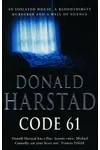
- Code 61 (2002): When a colleague's niece dies in what looks like a routine suicide, Houseman is sent to investigate a mansion on the edge of the county. The dispatcher calls in a "Code 61"—a real police code indicating the need for strict radio silence. Houseman soon uncovers a bizarre, secretive subculture of individuals who ritualistically consume blood, raising the terrifying question of whether they are dealing with modern-day vampires or a highly organized, lethal cult.
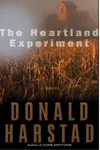
- A Long December (2003) (Also published under the title The Heartland Experiment): Set shortly after the events of September 11, 2001, the fifth book begins with a body found in a ditch with no dental records, fingerprints, or identification. An FBI agent joins the case, suspecting the victim might be a Colombian terrorist. Alongside this international mystery, Houseman has to deal with a local crisis involving a major meat-packing plant and potentially contaminated products, highlighting the collision of global events with small-town Iowa.
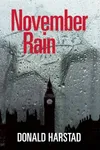
- November Rain (2009 / 2015): The sixth and final book in the Carl Houseman sequence shifts the action far from Nation County. When Houseman's daughter, Jane, who is studying abroad in London, calls him in a panic because her best friend has been kidnapped, Carl boards a plane to the United Kingdom. Serving as an unofficial consultant to Scotland Yard, Houseman brings his rural Iowa sensibilities and methodical investigative techniques to London to track down a rogue academic and a cell of political extremists.
The Standalone Novel
Three Octobers (2005)
Between his fifth and sixth Houseman novels, Harstad wrote Three Octobers. While it is classified as a standalone novel rather than a direct part of the Carl Houseman sequence, it is set in the familiar environment of Nation County, Iowa. The narrative structure is unique, tracking a deputy sheriff who investigates a series of seemingly separate but ultimately interconnected crimes occurring over three successive autumns. It features the same atmospheric, procedural style that fans love, but functions as a self-contained story without Houseman as the primary protagonist.
What to Know Before You Start
If you are expecting high-speed car chases and cinematic shootouts on every page, Harstad's books might surprise you. His writing mirrors the true pace of rural law enforcement. Much of the tension is psychological, built on the claustrophobia of small communities where suspects and officers have known each other since childhood. The tone is heavily grounded in realism, punctuated by the mundane realities of the job—such as waiting hours for a search warrant or coordinates from a dispatcher. This authenticity is precisely what has earned Harstad a dedicated cult following among fans of classic police procedurals.
Chronological Caveats and Title Confusion
Fortunately, reading Harstad is straightforward. The chronological timeline of the stories matches the order in which they were written. However, there are two common points of confusion for collectors:
First, the fifth novel is known as A Long December in the United States, but was published under the title The Heartland Experiment in the United Kingdom and international markets. They are the exact same novel.
Second, November Rain has a split publication history. It was first released in the UK and international markets around 2009, but did not see a widespread US publication until it was picked up and re-released by Crooked Lane Books in 2015. If you are searching for physical copies, keep these dates and alternative titles in mind to avoid purchasing duplicate copies of the same book.