












The Recommended Reading Order: Where to Start
Because Dorothy Allison's catalog consists of standalone novels, short fiction collections, poetry, and memoirs rather than interconnected series, there is no strict chronological narrative order you must follow. However, for the best experience of her stylistic evolution and thematic depth, readers are highly encouraged to follow a structured path.
For most readers, the best starting point is her masterpiece, Bastard Out of Carolina (1992). This semi-autobiographical debut novel is the definitive introduction to Allison's raw, uncompromising voice, focusing on grit, resilience, poverty, and family dynamics in the American South. If you prefer to ease into her themes through shorter, punchier, and more explicitly queer-focused narratives, starting with her debut short story collection, Trash (1988), is a fantastic alternative. If you want to understand the real-life struggles and personal history behind her fiction, beginning with her hybrid memoir/performance piece, Two or Three Things I Know for Sure (1995), provides a powerful, emotional foundation before diving into her novels.
After completing your initial choice, move on to her second novel, Cavedweller (1998), which expands on her themes of survival, motherhood, and reconciliation. Finally, round out your reading with her essay collection, Skin: Talking About Sex, Class & Literature (1994), and her collected interviews to gain a deep appreciation for her activist history and literary philosophy.
Dorothy Allison’s Complete Bibliography
Standalone Novels
- Bastard Out of Carolina (1992): Her seminal debut novel set in Greenville, South Carolina, following a young girl named Ruth Anne "Bone" Boatwright who navigates extreme poverty and horrific abuse at the hands of her stepfather. A finalist for the National Book Award.
- Cavedweller (1998): Allison's bestselling second novel, which follows Delia Byrd, a former rock singer who escapes an abusive relationship in California and returns to her home town in Georgia to reclaim the two daughters she left behind years ago.
Short Fiction & Poetry Collections
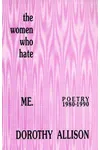
- The Women Who Hate Me (1983): Her debut poetry collection, later expanded and republished in 1991 as The Women Who Hate Me: Poetry 1980-1990. It explores lesbian identity, desire, and survival.
- Trash (1988): A groundbreaking collection of short stories that won two Lambda Literary Awards. It explores the lives of working-class, queer, and marginalized women with raw, unapologetic honesty.
Non-Fiction & Memoirs
- Skin: Talking About Sex, Class & Literature (1994): A fierce, influential collection of essays, autobiographical narratives, and speeches tackling classism, feminism, sexual desire, and identity. It won an American Library Association Award.
- Two or Three Things I Know for Sure (1995): A short, lyrical memoir originally developed as a performance piece. It integrates family photographs and narrative fragments to discuss beauty, abuse, and survival in the author's family.
- Conversations with Dorothy Allison (2012): A collection of interviews spanning her career, edited by Mae Miller Claxton, providing invaluable insight into her writing process.
Key Anthologies and Contributions
In addition to her primary books, Dorothy Allison was a prolific editor and contributor to anthologies that defined lesbian and feminist literature in the late 20th and early 21st centuries. Some of her most notable anthology work includes:
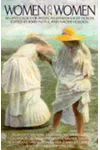
- Women on Women (1990): A landmark anthology of lesbian short fiction.
- Leatherfolk (1991): A pioneering collection exploring radical sex, community, and politics.
- High Risk (1991): An anthology focusing on transgressive and forbidden writing.
- Growing Up Gay/Growing Up Lesbian (1993): A literary anthology aimed at providing historical and modern perspectives for queer youth.
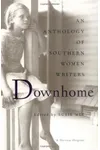
- Downhome (1995): A collection of writing about Southern women.
- Swords of the Rainbow (1996): A collection of sci-fi and fantasy stories by LGBTQ+ authors.
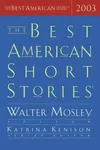
- The Best American Short Stories 2003 (2003): Featuring selected short fiction curated during that year.
- LGBTQ Fiction and Poetry from Appalachia (2019): A collection celebrating rural queer voices.
- OutWrite (2022): An anthology of LGBTQ+ literature highlighting historical conference presentations.
Chronological Order vs. Publication Order
Since Allison's stories are not part of an ongoing narrative universe, chronological ordering is less about character timelines and more about tracking her artistic growth and political evolution. Reading her work in order of publication allows readers to witness the development of her prose from the radical feminist poetry of the early 1980s to the mainstream narrative triumph of Bastard Out of Carolina and the mature, reflective tone of Cavedweller.
However, because many of her stories in Trash serve as thematic and emotional precursors to the semi-autobiographical events in Bastard Out of Carolina, reading them first can provide valuable context. Similarly, reading Two or Three Things I Know for Sure alongside Bastard Out of Carolina shows how she translated actual family traumas into fictionalized truths.
What to Know Before You Start: Tone, Context, and Adaptations
Dorothy Allison's writing is heavily classified as Southern Gothic with a strong, unapologetic feminist and queer perspective. Her work does not shy away from severe themes. Readers should prepare themselves for intense content, including domestic violence, child sexual abuse, extreme poverty, and societal shame. However, Allison's ultimate focus is not on victimhood, but on the pride, hope, and resilience of her characters.
Her work has successfully crossed over into visual media, demonstrating its enduring narrative strength. Bastard Out of Carolina was adapted into a critically acclaimed 1996 television film directed by Anjelica Huston, starring Jena Malone in a breakthrough role and Jennifer Jason Leigh. The film was noted for its raw and uncompromising depiction of abuse, which sparked controversy and censorship battles but ultimately won an Emmy for Outstanding Casting. In 2004, Cavedweller was adapted into a film directed by Lisa Cholodenko, starring Kyra Sedgwick and Aidan Quinn, winning the New American Cinema award at the Seattle International Film Festival.
The Lost Novel: "She Who"
For nearly two decades, fans of Allison eagerly anticipated a third novel titled She Who. The book was announced as early as 2007, but was never completed or published during her lifetime (Allison passed away in November 2024). In interviews, Allison described the unfinished project as an exploration of the aftermath of physical trauma, focusing on three women damaged by violence. She spoke candidly about the difficulty of writing the manuscript, noting the emotional strain of remaining in the "horrific" headspace required to do the story justice. The manuscript and its notes are now preserved within the Dorothy Allison Papers collection at Duke University Libraries.
Practical Reading Guidance
- Are the books standalones? Yes, every book by Dorothy Allison can be read independently. You will not lose any plot continuity by reading them out of order.
- What is the best entry point? Start with Bastard Out of Carolina to experience her narrative power, or Trash if you prefer short stories.
- Is her non-fiction essential? Yes. Works like Two or Three Things I Know for Sure provide crucial, real-life context that will deepen your appreciation of her fiction.