








Where to Start Reading Dorothy L. Sayers
For readers looking to dive into the work of Dorothy L. Sayers, one of the undisputed queens of the Golden Age of detective fiction, there are two primary entry points depending on what you want out of a mystery series. Because character growth and relationships form the spine of her work, choosing the right starting line will shape your entire reading experience.
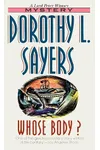
Option A: Start at the Very Beginning with Whose Body? (1923). This is the ideal choice if you enjoy watching a character develop from their inception. Here, we meet Lord Peter Wimsey as a lighthearted, monocle-wearing aristocratic sleuth who conceals his shell-shock from World War I behind a mask of frivolous chatter. It is a traditional Golden Age puzzle that establishes Wimsey’s signature style, his loyal valet Bunter, and his working relationship with Inspector Charles Parker.
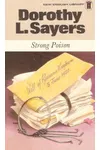
Option B: Start with the Harriet Vane Arc in Strong Poison (1930). If you prefer deep psychological complexity, character-driven subplots, and one of the most celebrated intellectual romances in crime fiction history, start here. Strong Poison introduces Harriet Vane, a mystery writer on trial for the murder of her lover. Lord Peter’s attempt to clear her name begins a multi-book romance that transforms the series from standard whodunits into literary masterpieces. Starting here means skipping the first five books, which you can easily read later as prequels.
Dorothy L. Sayers' Lord Peter Wimsey Reading Order
The original Wimsey stories are best read in order of publication. This matches the chronological progression of Wimsey’s life, his evolving emotional maturity, and the shifting tone of the series from lighthearted puzzle-solving to serious, thematic novels. The list below details the full run of Sayers' original Wimsey works, including both novels and core short story collections.
- Whose Body? (1923) – The debut novel. A naked body is found in a bath, and a wealthy financier goes missing. Wimsey investigates his first major case.
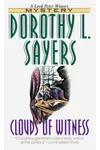
- Clouds of Witness (1926) – Wimsey must defend his own brother, the Duke of Denver, who is accused of murdering their sister's fiancé.
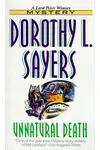
- Unnatural Death (1927) – Wimsey investigates a death that a doctor suspects was murder, even though there are no physical signs of foul play. Also published under the title The Dawson Pedigree.
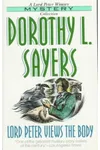
- Lord Peter Views the Body (1928) – The first major short story collection. These twelve stories show Wimsey solving bizarre puzzles, from stolen brains to copper chests.
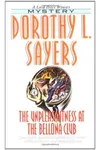
- The Unpleasantness at the Bellona Club (1928) – A classic country club mystery dealing with the inheritance of an elderly veteran who died on Armistice Day, exploring themes of post-war trauma.
- Strong Poison (1930) – The turning point of the series. Harriet Vane is introduced, and Wimsey must find the real killer to save her from the gallows.
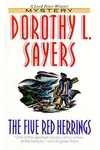
- Five Red Herrings (1931) – A highly technical mystery set in an artistic community in Scotland. Wimsey must untangle the complicated train timetables of six suspect artists.
- Have His Carcase (1932) – Harriet Vane finds a throat-cut body on a beach. Wimsey joins her to solve the case, and their complex courtship continues.
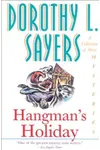
- Hangman's Holiday (1933) – A collection of short stories containing four Wimsey mysteries, alongside the introduction of Sayers' other series detective, Montague Egg.
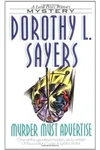
- Murder Must Advertise (1933) – Wimsey goes undercover at an advertising agency (drawing heavily on Sayers' real-life experience as a copywriter) to investigate a suspicious fall down the stairs.
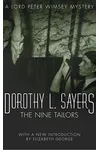
- The Nine Tailors (1934) – Widely considered one of Sayers' masterpieces. Set in the damp fens of East Anglia, it is a atmospheric mystery built around the art of change-ringing on church bells.
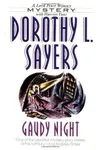
- Gaudy Night (1935) – The pinnacle of the series. Set at an Oxford women's college, this novel functions as a feminist exploration of academic life and independent women, with Harriet Vane taking center stage while Wimsey assists.
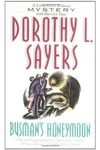
- Busman's Honeymoon (1937) – Subtitled "A Love Story with Detective Interruptions," this novel follows Peter and Harriet’s wedding and their subsequent attempt to enjoy a quiet honeymoon, which is ruined by a body in the cellar.
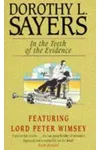
- In the Teeth of the Evidence (1939) – The final contemporary collection published during Sayers' life, containing two Wimsey stories, five Montague Egg stories, and ten other tales.
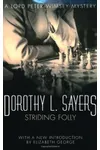
- Striding Folly (1973) – Published posthumously, this thin collection gathers the final three Lord Peter stories written by Sayers, including "Talboys," which offers a final glimpse of Peter and Harriet as parents.
The Jill Paton Walsh Continuation Novels
In the late 1990s, the estate of Dorothy L. Sayers authorized novelist Jill Paton Walsh to complete an unfinished manuscript left behind by Sayers. This grew into a series of four continuation novels that carry the lives of Peter and Harriet into the era of World War II and beyond. For the best experience, these should be read only after finishing the original Sayers books.
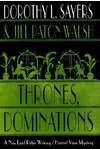
- Thrones, Dominations (1998) – Based on an extensive, unfinished draft written by Sayers in the late 1930s. It explores the early months of Peter and Harriet's marriage against the backdrop of the abdication crisis of King Edward VIII.
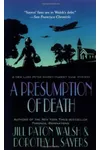
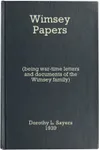
- A Presumption of Death (2002) – Set during the early years of World War II. Walsh constructed this novel using the letters from "The Wimsey Papers," a series of fictional letters Sayers published in The Spectator during the war. It features Harriet keeping the family safe in the countryside while Peter is abroad on a secret government mission.
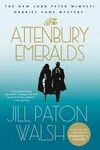
- The Attenbury Emeralds (2010) – A novel that addresses both Wimsey's very first case (the mystery of the Attenbury Emeralds, often referenced in the original books but never written by Sayers) and a modern mystery that springs from it decades later.
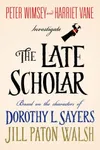
- The Late Scholar (2013) – Set in 1953, this novel sees Lord Peter Wimsey, now the Duke of Denver, visiting an Oxford college to resolve a dispute, only to find himself embroiled in a series of murders.
Standalone Novels, Plays, and Collaborations
While Lord Peter Wimsey was Sayers' primary focus, she also wrote standalone mysteries, collaborative novels with other members of the famous Detection Club, and a secondary short story series featuring a very different kind of detective.
The Montague Egg Stories
Unlike the aristocratic Wimsey, Montague Egg is a middle-class travelling salesman who sells wines and spirits for Plummet & Rose. He uses the rhyming maxims of his beloved Salesman's Handbook to solve crimes. Egg never received his own standalone novel; his eleven stories are collected across Hangman's Holiday (1933) and In the Teeth of the Evidence (1939). They offer a fun, brisk contrast to the longer, more academic Wimsey novels.
Standalone Novels and Collaborative Works
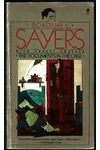
- The Documents in the Case (1930) – Sayers' only standalone mystery novel, co-authored with Robert Eustace. It is an epistolary novel told through letters and documents, focusing on a death by mushroom poisoning. It is notable for its scientific accuracy and lack of a traditional detective.
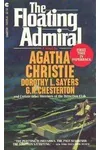
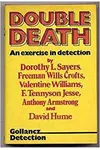
- The Floating Admiral (1931) – A round-robin mystery novel written by members of the Detection Club. Sayers wrote the third chapter and contributed her own solution to the puzzle.
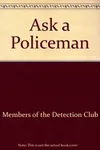
- Ask a Policeman (1933) – Another Detection Club collaboration where authors swapped detectives; Sayers wrote the section featuring Anthony Berkeley's sleuth Sheringham, while Berkeley wrote about Wimsey.
What to Know Before You Start
Dorothy L. Sayers was a pioneer who actively sought to elevate the detective novel into genuine literature. As you read, keep these key points in mind:
- Character Growth matters: Unlike Sherlock Holmes or Hercule Poirot, who remain relatively static, Lord Peter Wimsey ages, suffers from trauma, falls in love, marries, and changes his world view over the course of fourteen years. Reading the books out of order will spoil these major life events.
- Tone Shift: The early books (1923–1928) are lighter, focusing on clever puzzles and aristocratic banter. The middle and late books (1930–1937) are much denser, blending detailed social criticism, academic debate, and romantic drama.
- The Short Stories: The short stories are fun additions but are not strictly necessary to understand the main narrative arc of Peter and Harriet Vane. If you want to skip them to focus on the main plot, you will not lose the thread of the romance.