




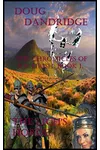
Where to Start Reading Doug Dandridge
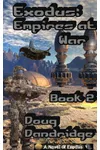
For the vast majority of readers, the absolute best place to start is with Exodus: Empires at War: Book 1 (2012). This novel launches Doug Dandridge's most popular, expansive military science fiction universe. It introduces the high-stakes galactic conflict, detailed space physics, and complex military strategies that defined his writing career. If you are a fan of classic space opera, fleet battles, and humanity fighting against overwhelming alien odds, starting here is a must.
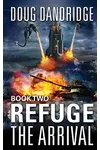
However, if you prefer portal fantasy mixed with modern military tactics—a subgenre where modern tanks, assault rifles, and human soldiers face off against dragons, wizards, and demons—your best starting point is Refuge: The Arrival: Book 1 (2012). For readers looking for a shorter, self-contained space opera survival story, The Deep Dark Well (2011) offers a fast-paced trilogy focused on a lone heroine's struggle in a far-future setting.
The Exodus Universe Reading Order
The Exodus universe is a massive, multi-faceted setting. It details a future where humanity, driven from Earth by an unstoppable alien threat, flees across the stars to establish the New Terran Empire. Centuries later, their ancient enemy, the Ca'cadasans, finds them again, sparking an interstellar war of epic proportions. The universe is divided into three distinct sub-series: the main storyline, a machine-threat spin-off, and a collection of frontier exploration tales.
1. Exodus: Empires at War (Main Series)
This is the core narrative of the Exodus universe. It should be read in strict numerical order. A common point of confusion among readers and online databases is the numbering of later books due to the exclusion of Day of Infamy (2016) in some listings. Below is the complete, corrected reading order for the main series:
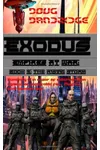
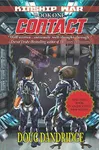
- Exodus: Empires at War: Book 1 (2012)
- Exodus: Empires at War: Book 2 (2012)
- The Rising Storm (Book 3) (2013)
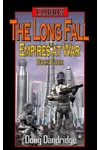
- The Long Fall (Book 4) (2013)
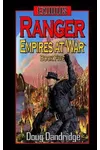
- Ranger (Book 5) (2013)
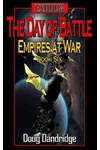
- The Day of Battle (Book 6) (2014)
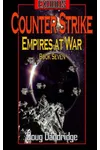
- Counter Strike (Book 7) (2014)
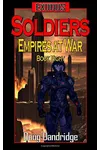
- Soldiers (Book 8) (2015)
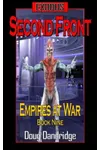
- Second Front (Book 9) (2015)
- Search and Destroy (Book 10) (2016)
- Day of Infamy (Book 11) (2016)
- Time Strike (Book 12) (2018)
- Retaliation (Book 13) (2018)
- Rebellion (Book 14) (2018)
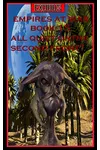
- All Quiet on the Second Front? (Book 15) (2019)
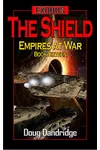
- The Shield (Book 16) (2019)
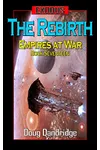
- The Rebirth (Book 17) (2020)
The Rebirth serves as the final book in the main storyline. Following the author's passing in 2021, the main arc remains concluded at Book 17.
2. Exodus: Machine War (Spin-Off Series)
The Machine War books focus on a parallel threat within the same universe: the Gorgana (or Gorgansha), a race of self-replicating killer machines that threaten both human and alien empires. While you can read these books independently after finishing the main series, the most immersive experience is to read them alongside the main line. The ideal placement is to start the Machine War after reading Second Front (Empires at War Book 9). Read them in the following order:
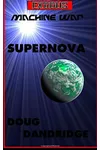
- Supernova (2015)
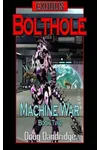
- Bolthole (2015)
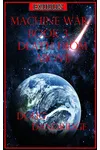
- Death From Above (2016)
- Retribution (2017)
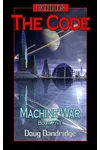
- The Code (2019)
3. Exodus: Tales of the Empire
These stories flesh out the lore, historical events, and outer frontier exploration of the New Terran Empire. They can be read at any time as standalone companions to enrich your understanding of the universe:
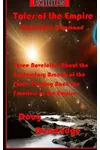
- Exploration Command (2014)
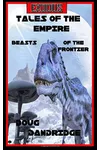
- Beasts of the Frontier (2016)
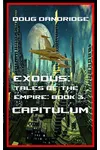
- Capitulum (2018)
The Refuge Series: Magic Meets Modern Tactics
In the Refuge series, Dandridge blends high fantasy with military sci-fi. When a spatial rift transports modern Earth military forces, civilians, and advanced hardware into a magical dimension, the newcomers must learn to survive against local sorcerers, monstrous races, and dark forces. There is some minor debate about where to start due to the release of a prequel, but the recommended reading order is:
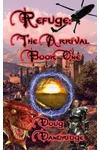
- Refuge: The Arrival: Book 1 (2012) - The essential starting point where the rift first transports Earth forces.
- Refuge: The Arrival: Book 2 (2012)
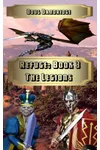
- The Legions (2013)
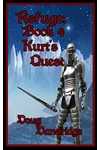
- Kurt's Quest (2014)
- Doppelganger (2012) - A companion novel that can be read either first as a prequel or fifth as an expansion of the world's lore.
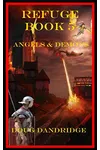
- Angels & Demons (2018) - The final published entry in the series.
The Deep Dark Well Series
This space opera trilogy follows a lone heroine fighting to protect humanity's remnants against an oppressive far-future government. It is a tighter, more character-focused story compared to the sweeping fleet actions of Exodus. Read them in this order:
- The Deep Dark Well (2011)
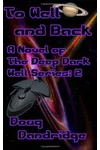
- To Well and Back (2013)
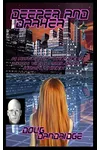
- Deeper and Darker (2014)
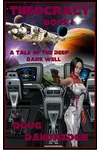
Additionally, you can read the standalone companion story Theocracy (2016), which is set within the same universe.
Shared Universes and Co-Authored Work
A point of confusion for many new readers is the appearance of series like The Revelations Cycle and the Four Horsemen Universe in Doug Dandridge's bibliography. These are massive, multi-author shared military sci-fi universes. Dandridge did not write the entirety of these series; instead, he contributed specific works to them. If you want to follow his contributions, look for:
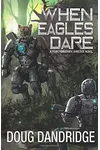
- When Eagles Dare (2018) - A standalone novel set in the Four Horsemen Universe (Book 5 of the Four Horsemen Tales).
- "With the Eagles" - A short story contributed to the anthology A Fistful of Credits (2017).
You do not need to read the entire Four Horsemen Universe to enjoy his contributions, though they do provide additional context on the universe's mercenary factions.
What to Know Before You Start
Doug Dandridge's writing style is heavily informed by his background as a U.S. Army veteran and a clinical psychologist. His space battles feature realistic physics, orbital mechanics, and detailed tactical maneuvers, drawing comparisons to David Weber's Honorverse. However, his psychology training shines in how he depicts the trauma of war, leadership stress, and civilian resilience. Despite the dark situations his characters face, the overall tone of his work remains hopeful, celebrating human determination and adaptability.