
Recommended Reading Paths for Edmund Morris
For readers looking to dive into the work of Pulitzer Prize-winning biographer Edmund Morris, the path forward is straightforward but comes with a few fascinating detours. Because Morris focused on exhaustive, narrative-driven historical portraits rather than sprawling fictional universes, your reading order will depend on whether you want to follow a chronological history of a single figure or explore his unique, experimental approaches to biographical storytelling.
The Presidential Masterclass: The Theodore Roosevelt Trilogy
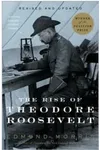
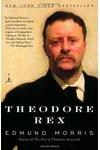
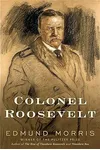
If you want to experience Morris at the absolute height of his literary powers, you should start with his masterpiece: the Theodore Roosevelt Trilogy. This series must be read in chronological / publication order. It represents a lifetime of research and presents a seamless, cinematic portrait of the 26th President of the United States. Start with The Rise of Theodore Roosevelt, follow it with Theodore Rex, and conclude with Colonel Roosevelt. Reading these out of order is not recommended, as each volume directly builds on the character development, political landscapes, and personal tragedies of the previous installment.
The Standalone Biographies and Experimental Path
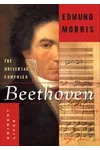
If you are more interested in his standalone historical biographies, you can read these in any order. However, you should prepare yourself for some unconventional narrative structures. His biographies of Ronald Reagan (Dutch) and Thomas Edison (Edison) depart from traditional chronological formats. We recommend starting with Beethoven: The Universal Composer if you want a short, conventional, and highly accessible introduction to his non-presidential subjects before tackling his more experimental works.
Detailed Breakdown of the Theodore Roosevelt Trilogy
Edmund Morris spent over thirty years documenting the life of Theodore Roosevelt. The resulting trilogy is widely considered one of the greatest achievements in presidential biography, combining meticulous academic research with the pacing and narrative drive of a novel.
1. The Rise of Theodore Roosevelt (1979)
This first volume covers Roosevelt's life from his birth in 1858 in New York City up to his sudden ascension to the presidency in 1901 following the assassination of William McKinley. The book details his frail childhood, his time as a Harvard student, his ranching years in the Dakota Badlands, his leadership of the Rough Riders, and his rapid rise through New York politics. It is the perfect starting point and won both the Pulitzer Prize for Biography or Autobiography and the National Book Award.
2. Theodore Rex (2001)
The second installment focuses exclusively on Roosevelt's two terms in the White House (1901–1909). Unlike the first book, which details Roosevelt's personal evolution, this volume is a dense, dramatic study of political power. Morris chronicles the construction of the Panama Canal, the mediation of the Russo-Japanese War (which won Roosevelt the Nobel Peace Prize), and his domestic progressive reforms. It reads as a day-by-day account of executive decision-making.
3. Colonel Roosevelt (2010)
The final book of the trilogy covers the post-presidential years, beginning in 1909 when Roosevelt left office and embarked on an African safari, continuing through his third-party "Bull Moose" campaign in 1912, his perilous expedition down the River of Doubt in Brazil, and ending with his death in 1919. It is a poignant, elegiac look at a restless statesman trying to find his place in a changing world.
Crucial Caveats: The Unique Structures of Edison and Dutch
Morris was not content with standard chronological structures, and his books on Ronald Reagan and Thomas Edison are famous for their stylistic experiments. Readers must understand these formats before diving in.
Edison (2019) and the Reverse Chronology
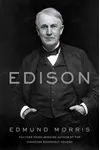
Published posthumously, Morris's biography of the legendary inventor Thomas Alva Edison is written in reverse chronological order. The book is divided into decades, starting with Edison's death in the 1931 and moving backward step-by-step to his birth in 1847. Morris designed this to peel back the layers of the aging, famous icon to reveal the energetic, young inventor underneath. While some readers find this structure challenging, it is intended to be read exactly as printed rather than flipping to the back first.
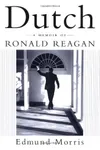
Dutch: A Memoir of Ronald Reagan (1999) and the Fictional Narrator
As the authorized biographer of Ronald Reagan, Morris spent years with unprecedented access to the President. However, finding Reagan's inner character elusive, Morris chose to write the biography from the perspective of a fictionalized narrator named "Edmund Morris" who grew up alongside Reagan in Illinois. This blending of historical facts and imaginative memoir caused significant controversy upon its release. Readers should approach this book not as a traditional reference biography, but as a unique literary experiment on the nature of memory and identity.
Understanding the Eminent Lives Series
Local database records include a variety of titles under the "Eminent Lives" collection. It is highly important to clarify that Eminent Lives is a multi-author series of short biographies published by HarperCollins, edited by James Atlas. While the series includes works on George Washington, Thomas Jefferson, and Caravaggio by other writers, Edmund Morris only authored a single volume for this project:
- Beethoven: The Universal Composer (2005): Morris, a trained pianist and music lover, wrote this concise, highly praised biography of Ludwig van Beethoven. It provides a marvelous starting point for readers who want to experience Morris's prose style in a compact, standalone format of under 250 pages.
Companion Works and Essays
This Living Hand: And Other Essays (2012)
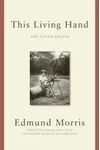
For readers who want to understand Morris's personal thoughts on his subjects and the craft of writing, this collection is an invaluable companion. It compiles essays, lectures, and articles spanning forty years. Of particular note to readers of his biographies is the title essay, which offers a moving and direct reflection on Ronald Reagan's final years and his battle with Alzheimer's disease, providing helpful context for those reading Dutch.
What to Know Before You Start
Before reading Edmund Morris, it helps to understand that he wrote as a literary biographer. He prioritized narrative drive, atmosphere, and the psychology of his subjects. His prose is rich, vocabulary-heavy, and deeply immersive. While the Theodore Roosevelt Trilogy is widely praised for its historical accuracy, his works on Reagan and Edison are better appreciated as experiments in biographical form. If you are looking for straightforward, dry academic textbooks, Morris's style might surprise you; if you want history to feel alive, there is no better guide.
Edmund Morris Books in Publication Order
- The Rise of Theodore Roosevelt (1979)
- Dutch: A Memoir of Ronald Reagan (1999)
- Theodore Rex (2001)
- Beethoven: The Universal Composer (2005)
- Colonel Roosevelt (2010)
- This Living Hand: And Other Essays (2012)
- Edison (2019)