










Where to Start Reading David Gerrold
With a career spanning over five decades, David Gerrold has written across several subgenres of science fiction. The best place to start depends entirely on what kind of story you want to read:
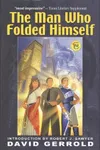
- For Time Travel and Philosophical Sci-Fi: Start with the standalone novel The Man Who Folded Himself (1973). Widely considered a masterpiece of time-travel literature, it is a brilliant, personal, and deeply psychological exploration of the genre's classic paradoxes.
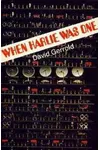
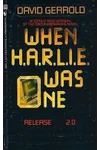
- For Classic AI Speculation: Start with When HARLIE Was One (1972) or its updated version, When H.A.R.L.I.E. Was One 2.0 (1988). It is one of the definitive early novels about artificial intelligence and machine self-awareness.
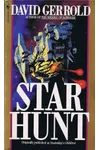
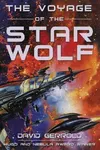
- For Hard Military Space Opera: Start with The Voyage of the Star Wolf (1990). While Yesterday's Children (also published as Star Hunt) is chronologically the first book in the Star Wolf universe, Voyage is where the series truly finds its modern, action-packed footing.
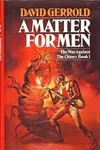
- For Ecological Alien Invasion: Start with A Matter for Men (1983), the first book in the famous War Against the Chtorr series. Be warned, however, that this intense saga remains unfinished.
- For Young Adult Space Adventure: Start with Jumping Off the Planet (2000), the first book of the Dingilliad trilogy, which follows a family's attempt to escape a crowded Earth.
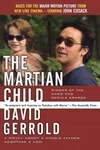
- For Heartfelt Drama: Read The Martian Child (2002), a Hugo and Nebula award-winning semi-autobiographical novel about a single father adopting a boy who believes he is from Mars.
The War Against the Chtorr
This is Gerrold's most famous and polarizing series. It depicts a slow-moving, horrific ecological invasion of Earth by an alien biosphere called the Chtorr. Instead of flying saucers, humanity faces giant purple worms, strange microbes, and a shifting environment. The series is best read in publication order, as it follows a continuous narrative arc:
- A Matter for Men (1983)
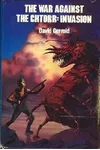
- A Day for Damnation (1984)
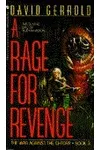
- A Rage for Revenge (1989)
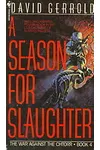
- A Season for Slaughter (1992)
- Method for Madness (announced/in progress)
Important Caveat: The series has been stalled since the early 1990s. While Gerrold has worked on Method for Madness and planned further books, readers should know before starting that the main storyline remains unresolved.
Tales of the Star Wolf
This military science-fiction series focuses on the starship Star Wolf and the psychological pressures of space warfare. It serves as a direct influence on many modern space operas. The series is best read in publication order:
- Yesterday's Children / Star Hunt (1972)
- The Voyage of the Star Wolf (1990)
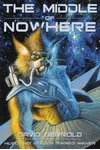
- The Middle of Nowhere (1995)
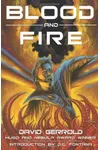
- Blood and Fire (2000)
Behind the Scenes: The fourth book, Blood and Fire, has a fascinating history. It was originally written by Gerrold in 1987 as a script for Star Trek: The Next Generation, intended to feature the franchise's first openly gay characters and serve as an allegory for the AIDS crisis. After the script was shelved by producers, Gerrold reworked it decades later into a standalone Star Wolf novel.
The Dingilliad & Hella
Also known as the Starsiders Trilogy, this YA series follows the Dingillian family as they navigate space travel, colonization, and interplanetary politics. The trilogy is tightly structured, but it is expanded by a late-career sequel:
- Jumping Off the Planet (2000)
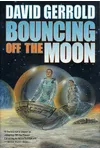
- Bouncing Off the Moon (2001)
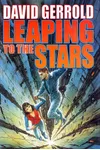
- Leaping to the Stars (2002)
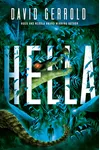
- Hella (2020)
Hella is set in the same universe and takes place on the low-gravity planet Hella, acting as a thematic continuation and sequel to the original trilogy.
Understanding the "Millennium Books" Confusion
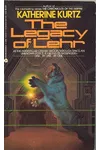
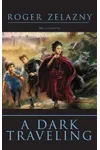
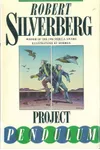
In bibliographies, you will often see a list under the title "Millennium Books" that includes titles like The Legacy of Lehr, A Dark Traveling, and Project Pendulum. It is important to clarify that this is not a series written by David Gerrold.
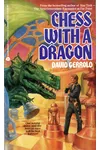
In the late 1980s, publisher Walker & Company released a special ten-book YA science fiction line edited/curated by Byron Preiss called the "Millennium" series. Each book in this line was written by a different famous sci-fi author. Gerrold's sole contribution to this publisher collection is the novel Chess With A Dragon (1987). The other books in that list were written by authors like Katherine Kurtz, Roger Zelazny, and Robert Silverberg. You do not need to read the other authors' books to enjoy Gerrold's standalone YA novel.
Other Duologies and Standalones
Gerrold has written several other shorter series and notable standalones:
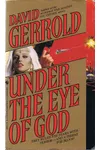
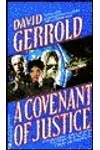
- The Trackers Duology: Comprising Under the Eye of God (1993) and A Covenant of Justice (1994), this is a space opera duology featuring genetic engineering and rebellion.
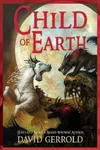
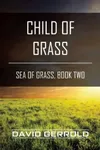
- The Sea of Grass Duology: Comprising Child of Earth (2005) and Child of Grass (2014), which explores a unique alien landscape.
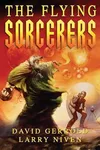
- The Flying Sorcerers (1970): A humorous fantasy/sci-fi novel co-authored with Larry Niven.
- Star Trek Work: Gerrold wrote several novelizations and fotonovels in the 1970s and 1980s, including adaptations of his own famous episode "The Trouble with Tribbles" and the TNG pilot "Encounter at Farpoint".