

Where to Begin: The Ultimate Andre Norton Reading Path
With over 300 published works spanning space opera, portal fantasy, time travel, and high fantasy, Andre Norton's bibliography can feel overwhelming. Fortunately, you do not need to read her entire catalog in one go. Her work is structured into independent series, allowing you to choose a starting point based on your preferred subgenre.
We recommend starting with one of these four entry points:
- For Portal and Science-Fantasy: Begin with Witch World (1963). This is her most famous creation, introducing a rich world of magic, parallel universes, and ancient technology.
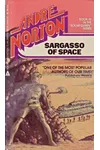
- For Space Opera and Golden Age Sci-Fi: Start with Sargasso of Space (1955), the first book in the Solar Queen saga. It is a light, fun, and fast-paced adventure about independent space traders.
- For Time Travel and Suspense: Pick up The Time Traders (1958). It blends Cold War tension with prehistoric exploration and alien mysteries.
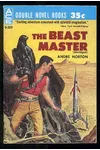
- For Ecological Sci-Fi and Animal Bonds: Start with The Beast Master (1959), which features a telepathic connection between human protagonists and animal companions.
The Witch World Universe
Norton's signature setting is the Witch World. This sprawling science-fantasy universe is divided into distinct regional and narrative cycles. While publication order works perfectly fine, grouping the books by their specific cycles offers the most coherent reading experience.
1. The Estcarp Cycle
This is the core storyline of the universe. It follows Simon Tregarth, a fugitive from Earth who is transported to the Witch World, and his children. It is highly recommended to read these in order:
- Witch World (1963)
- Web of the Witch World (1964)
- Three Against the Witch World (1965)
- Warlock of the Witch World (1967)
- Sorceress of the Witch World (1968)
- Trey of Swords (1977)
- 'Ware Hawk (1983)
- The Gate of the Cat (1987)
- Ciara's Song (1998)
- The Duke's Ballad (2005)
2. The High Hallack Cycle
Set on a western continent ravaged by war, this cycle focuses on localized conflicts, folklore, and magic. These books are much more standalone but are best read after the core Estcarp novels:
- Year of the Unicorn (1965)
- The Crystal Gryphon (1972)
- Spell of the Witch World (1972)
- The Jargoon Pard (1974)
- Zarsthor's Bane (1978)
- Gryphon in Glory (1981)
- Horn Crown (1981)
- Gryphon's Eyrie (1984)
- Were-Wrath (1984)
- Songsmith (1992)
- Silver May Tarnish (2005)
3. The Turning Cycle
This subseries deals with a massive cataclysm that reshapes the Witch World. Because of the heavy continuity, read these after completing the early Estcarp and High Hallack books:
- Storms of Victory (1991)
- Flight of Vengeance (1992)
- On Wings of Magic (1993)
- The Key of the Keplian (1995)
- The Magestone (1996)
- The Warding of Witch World (1997)
Solar Queen and Time Traders: Classic Sci-Fi
Norton's early science fiction is characterized by optimism, exploration, and resourceful underdogs. Two major series stand out here.
The Solar Queen (Dane Thorson) Series
Writing originally under the pen name Andrew North, Norton followed the crew of the cargo ship Solar Queen as they negotiated trading rights on alien worlds. The first four novels are solo works by Norton, while the later entries are collaborations:
- Sargasso of Space (1955)
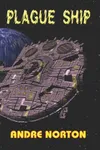
- Plague Ship (1956)
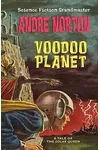
- Voodoo Planet (1959)
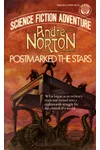
- Postmarked the Stars (1969)
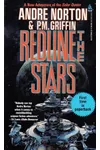
- Redline the Stars (1993, with PM Griffin)
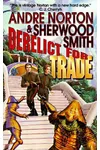
- Derelict for Trade (1997, with Sherwood Smith)
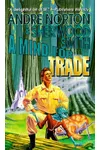
- A Mind for Trade (1998, with Sherwood Smith)
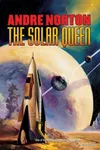
- The Solar Queen (2003, omnibus/collection)
The Time Traders (Ross Murdock) Series
This series begins as a Cold War time-travel thriller and expands into a galactic mystery involving ancient spacefarers known as the Baldies. Read them in publication order:
- The Time Traders (1958)
- Galactic Derelict (1959)
- The Defiant Agents (1962)
- Key Out of Time (1963)
- Firehand (1994, with PM Griffin)
- Echoes in Time (1999, with Sherwood Smith)
- Atlantis Endgame (2002, with Sherwood Smith)
Beast Master and Other Animal Bond Series
Norton was a pioneer in using telepathic bonds between humans and animals. This theme is prominent in two main sequences.
Beast Master (Hosteen Storm) Books
Following Hosteen Storm, a Navajo veteran displaced after the destruction of Earth, who uses a team of genetically altered animal scouts to survive on frontier worlds:
- The Beast Master (1959)
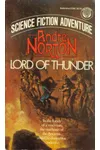
- Lord of Thunder (1962)
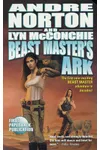
- Beast Master's Ark (2002, with Lyn McConchie)
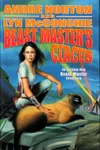
- Beast Master's Circus (2004, with Lyn McConchie)
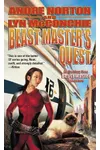
- Beast Master's Quest (2006, with Lyn McConchie)
The Dipple Books
These books take place in a shared universe and focus on refugees of interstellar wars who live in squalid camps known as the Dipple, using animal bonds and stealth to survive:
- Catseye (1961)
- Night of Masks (1964)
- Masks of the Outcasts (2004)
Fantasy Collaborations: Trillium & Halfblood Chronicles
In her later career, Norton collaborated with other legendary fantasy writers to build rich, new worlds.
- The Trillium Series: Co-created with Marion Zimmer Bradley and Julian May. The series starts with the collaborative novel Black Trillium (1990) and branches off. Norton wrote the third book, Golden Trillium (1993).
- The Halfblood Chronicles: A high fantasy rebellion story co-written with Mercedes Lackey. Read the books in publication order: The Elvenbane (1991), Elvenblood (1995), and Elvenborn (2002).
Caveats and Chronological Variations
For most of Norton's series, publication order is the safest bet. However, a few series have notable chronological variations to keep in mind:
- The Magic Books: This children's fantasy sequence has a slightly different chronological order due to late additions. Chronologically, you should read Steel Magic (1965), Octagon Magic (1967), and Dragon Magic (1967) followed by the late prequel Dragon Mage (2009), before proceeding to Fur Magic (1968), Lavender-Green Magic (1974), and Red Hart Magic (1976).
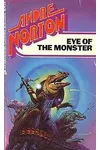
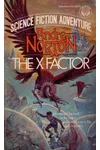
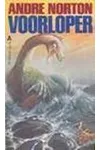
- Game of Stars and Comets: While published starting with The Sioux Spaceman (1960), the chronological order places The X Factor (1965) first, followed by The Sioux Spaceman (1960), Eye Of The Monster (1962), and Voorloper (1980).
- Star Ka'at: The children's sci-fi series is best read starting with the titular Star Ka'at (1976), even though Star Ka'at World and Star Ka'ats and the Winged Warriors were published in the same year.